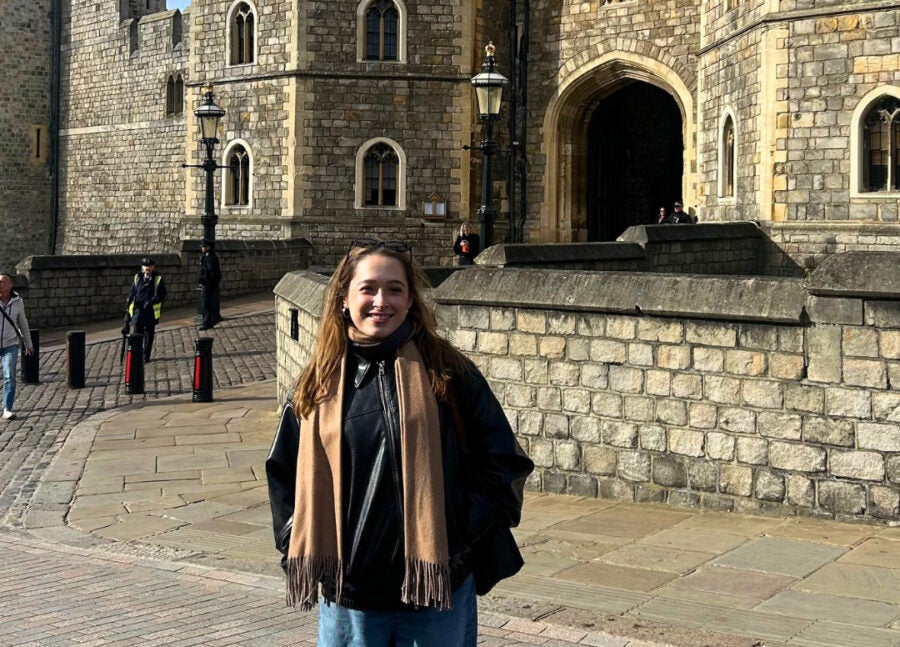

Congratulations on being accepted into a study abroad program in Spain! After going through the arduous process of applying and gaining admission to a program, students studying in Spain then face what seems to be an even more challenging application process for the student visa itself.
But don’t worry: We are here to help demystify the Spanish visa process and guide you in your pursuit of the wonderful opportunity to study abroad! We hope you can use this as a helpful guide to navigate the visa application process and ensure you are all set when you leave for Spain.
Overview
Spain has consistently added new requirements to its immigration processes, including student visas. Most recently, this process has become more intensive and detail-oriented, requiring application timelines to be tightened.
As such, we highly recommend that you double-check all your paperwork and start this process early. If not, your application may be rejected, or your visa may not be processed in time for your program.
Disclaimers
Before we get started, here are some important things to note:
- We are NOT visa experts. Education Abroad does not and cannot provide official visa advising. Always refer to the Spanish consulate website for official information. Information provided by Education Abroad should not be taken as legal advice.
- The information in this blog post is specifically geared toward U.S citizens applying for a visa through the Houston jurisdiction. Although citizens of most countries are subject to the same requirements and process, and BLS International can process visa applications for non-U.S. citizen students through the consulate in Houston, non-U.S. citizens should confirm Spain’s visa and entry guidelines for citizens of their country.
- The Spanish visa process is constantly evolving. Please consult the official Spanish consulate/ government websites for the most up-to-date, accurate requirements and process for a student visa.
Who needs a visa?
Generally, anyone participating in a program that lasts more than 90 days will need to obtain a student visa. The one major exception to this is for citizens of EU/EEA countries or Switzerland, who do not need to obtain a student visa to study in Spain, but should check for other requirements, such as residency registration.
If you are a U.S. citizen participating in a short-term program (e.g., May Term, Summer Term) and will be in Spain for no longer than 90 days within a 180-day period, you will most likely not need to obtain a student visa.
Non-U.S. citizens may or may not need to obtain a visa for short-term study in Spain, depending on their country of citizenship. Please consult official government sources to confirm whether you will need to apply for a visa based on your specific situation.
If you are an international student at UT, be mindful of any relevant considerations for your U.S. visa, status, and re-entry requirements.
How to Apply
You can submit your application by mail or by in-person appointment:
The address for both mail-in applications and in-person application appointments is:
BLS Visa Application Center – Houston
2500 West Loop South
3rd Floor, Suite 350
Houston, Texas 77027
When mailing an application, please follow all BLS postal instructions. Many students underestimate how precise the mailing instructions are. Read them line by line.
If utilizing the courier service to have your passport and original documents mailed back, include a signed Courier Form with your application for mailing authorization. All applicants, whether in person or by mail, should also submit a Disclaimer Form.
Please note that while the Spanish consulate has outsourced all visa applications to BLS International, BLS is a third party that processes your application and then sends it to the Spanish Consulate for review. The company does not make visa decisions.
Remember to always cross-reference the official Spanish consulate website for any updates or changes to the application process.
Where to Apply
The closest Consulate General of Spain to Austin (and the only one in Texas) is located in Houston. Students whose permanent address is in Texas (along with Alabama, Arkansas, Louisiana, Mississippi, Tennessee, New Mexico, and Oklahoma) must apply through this consulate.
UT students who have maintained permanent residency in other states or territories (e.g., out-of-state students) are also eligible to apply through the Houston consulate using their UT ID as proof of residence but may have the option to apply through their home region’s consulate. We generally recommend that all UT students go through the Houston consulate.
All student visa applications for Spain are processed by BLS International, an official service provider for the Consulate General of Spain. Any applications mailed directly to the consulate will NOT be processed.
Some additional notes:
- If you are studying abroad through an affiliate program, you may have access to batch processing and/or additional visa application guidance from your provider. Please consult directly with your affiliate provider regarding any such assistance, including any associated deadlines or fees.
- Non-citizen permanent residents are eligible to apply through U.S. consulates (requires a notarized copy of the Permanent Residence Card).
- International students studying in the U.S. on a student visa are eligible to apply through the Houston consulate (requires a copy of the I-20 document and a notarized copy of a valid U.S. visa).
Required Documents
Please refer directly to the BLS International website for detailed information on the extensive list of documents required for a student visa application. The list can be found by clicking the link and navigating to the Documents Required tab.
Please be aware that any students requiring a visa for more than 180 days will be required to complete a background check. Because visa issuance dates are calculated by adding 45 days to the duration of your program (1 month before and 15 days after), any students with programs exceeding 135 days will fall under this requirement. Though most semester-long programs do not exceed 135 days, please confirm your program dates to determine whether this applies to you.
It is especially important to be aware of the background check requirements. The process can be intensive and time-consuming; may require multiple rounds if you’ve recently lived in another country; and is strict on requiring FBI-issued checks, authentication through apostille certificates, certified translations, and originals and copies of documents. Thoroughly review the BLS website for specific requirements.
Application Fees
As fees and pricing are subject to change, please refer directly to the BLS and consulate websites for the most current information available.
In general, applicants will be required to pay two separate fees:
- BLS Service Fee (paid to BLS for processing your application).
- Consulate Fee (paid to the consulate for processing and providing a visa).
There are also additional fees paid to BLS for optional services, including:
- SMS and STS tracking notifications. (We recommend opting in for added reassurance and receiving updates as to whether your application has been received, where it is in the process, etc.)
- Courier fee for return shipping. (Refer to the BLS Additional Services page for more information.)
All BLS fees (service fee, notification fee, courier fee, etc.) can be paid online.
The consulate fee should be paid via a money order included in your physical submission. Please ensure that the payment amount matches the most up-to-date and accurate information provided by the consulate and BLS, and follow any other guidelines provided in the Mail-in Instructions.
PLEASE NOTE: USPS-issued money orders will not be accepted and will be returned, which may delay your application.
Pros and Cons: Mail-In vs. In-Person
Students can submit their applications by mail for convenience and to speed through the application process, avoiding wait times for in-person appointments or travel to and from the BLS office. This option is helpful if you are far from Houston, but please note that ALL documents must be mailed, including the originals.
Without an in-person appointment to confirm with BLS staff that you have completed your application correctly, there could be delays in the application process if documents need to be sent back due to mistakes. On rare occasions, delays or issues may occur during the mailing process.
On the other hand, in-person appointments allow you to confirm that your documents and all application components are correct at the time of submission, immediately address any issues with your application, and potentially feel more confident about the completeness of your application upon submission.
However, appointment slots may be limited, adding a wait time that mail-in applications would not incur, and travel to and from Houston, as well as scheduling conflicts, can be an issue. You may also be asked to provide additional documents, and you could be sent away from your appointment without submitting your application if corrections are needed.
Ultimately, it is up to you to weigh the pros and cons and choose the option that best fits your needs.
Timely Application
Student visa applications for Spain must be submitted at least 60 days before the start date of your studies. However, you should begin preparing your application far in advance of this deadline. Typically, students should begin preparing as soon as they receive confirmation of admission to a program (though some components can and should be worked on before, such as applying for a passport).
In order to prepare for the application, you should:
- Apply for a passport if you do not have one, or if your current one will expire within one year of your program ending. Note: your student visa will be processed by adding one month prior to the start date of your program and 15 days after completion. Use the +15 date when calculating this “one year” period
- Begin collecting the required documents
- Schedule medical exams—appointments can be booked several weeks in advance
- Research insurance options and translation services. Note that all translations must be certified, professional translations. Simply using Google Translate or a friend who happens to speak Spanish are not valid options. BLS recommends using Travel Visa Pro.
- Initiate as early as possible any processes or documents that require involvement from external parties, especially those that are time-intensive (e.g., passport, background check, translations, notarization, requesting letters from program coordinators, etc.)
- If participating in an exchange program: submit any secondary applications with the host university as early as possible. Doing so can provide official acceptance letters and financial/housing documents that may be required during the visa application process
- Request background checks (for programs over 180 days)
Aim to submit your visa application as early as possible to account for processing delays and to give you time to correct and resubmit it if it is rejected. Processing times can vary significantly depending on:
- Time of year
- Volume of applications
- Whether your application is complete
- Whether additional documentation is requested
Delays are common during high-volume months, so it is important to be proactive and start the process as early as possible. Also, be mindful of any submission deadlines listed on the BLS website or given by your affiliate provider, if applicable. In general, you must submit at least two months in advance of your program start date, as processing can take two months. We recommend submitting earlier to account for longer processing times or possible rejections and resubmissions.
This process is not something that you can start or complete at the last minute. If you wait until the last minute to work on your visa application, there are some things that will be logistically difficult or impossible to complete in time (e.g., applying for and receiving a passport, scheduling and completing an appointment for medical clearance, receiving a proof of financial means letter from Education Abroad, obtaining certified translations, etc.).
Cautionary Tale: We’ve had several students in the past who were admitted to a program in Spain but were unable to go abroad due to late submissions and other visa issues.
Health Insurance
All students who participate in UT-sponsored international travel, including study abroad, are required to enroll in the UT Overseas Insurance plan through On Call International. Although this insurance plan provides extensive coverage, it is not sufficient to meet the Spanish government’s health insurance requirements for a student visa. As such, students studying in Spain will need to independently secure an additional insurance plan that meets the requirements for the Spanish student visa application.
For students studying through an affiliate program, the insurance provided by the affiliate provider is typically sufficient to meet these requirements but be sure to double-check with your affiliate provider to confirm.
Obtaining independent health insurance will not exempt you from UT’s On Call International Insurance plan. The only exception to this requirement is for students who are citizens of a country in which they are studying. This means that you must ultimately obtain two separate insurance plans for your time in Spain.
Additionally, because your student visa will be processed with a start date one month prior to the start of your program and a completion date 15 days after the end of your program, the health insurance you obtain must also be valid for at least one month before the start of studies and 15 days after the end of studies.
Other Important Points
- In general, the Spanish visa application process is strict about requiring original documents, official letterhead (for medical forms), wet-ink signatures, certification, etc.
- We recommend that students fill out the application form electronically; if they choose to handwrite, use a black pen and capital letters.
- Confirm whether an original document, a photocopy, or both are being requested. For photocopies, submit a color copy unless otherwise specified.
- Some documents may require notarization or an official/certified Spanish translation. Plan in advance, as these require the involvement of external parties and cannot be acquired at the last minute.
- The medical certificate requirement for the Spain visa is separate from and in addition to the health clearance required by Texas Global. However, it is possible to obtain documentation for both in the same appointment with an M.D. or D.O.
- Texas Global Passport Services can take photos that meet ID photo requirements.
- Though passport facilities are able to take and print photos that meet the photo requirements for your visa application, do not submit a photograph that is the same as the one used in your passport. Doing so could result in your application being rejected.
- Our current understanding of the “one-year” rule for passports is that your passport must be valid for at least one year following the end of your program. Use the +15 date of your visa issuance when calculating.
- If you’re planning to travel outside of Spain before, during, or after your program, be sure to research any applicable visa and travel regulations. Be aware of the Schengen Agreement and which countries are included in it.
- We recommend requesting “multiple entries” on your visa application. This will allow you to travel outside of Spain and the Schengen region, and re-enter during your program dates.
We hope that this blog post has been helpful in navigating the Spanish visa application process.
Although we are always happy to help students during our Peer Mentor advising hours, please note that Education Abroad staff are generally not able to provide visa advice beyond what is covered in this blog post.
Good luck with your visa application process and study abroad journey!
This blog was contributed by Shana Richards and Hannah Shaikh, Peer Mentors for Spring 2026. Shana is a plan II honors and social work student who studied abroad in London, England (May Term 2024 faculty led program), and Edinburgh, Scotland (Fall 2024 exchange). Hannah is a public relations student who studied abroad in Dublin, Ireland (May Term 2025 faculty-led program).