Studying abroad in Seoul, South Korea, I found myself pondering my next meal at my local 7-Eleven or getting lost on the subway in the morning with friends. In these small moments, however, I also found myself doing things I have never done before alone. What once felt like a new environment has slowly become home.
Traveling 14 hours away from my family for the first day of college seemed exciting but terrifying. The night before my flight, I laid on my bed wondering if I would miss the noisy mornings or the TV playing loudly in the background. Still, I couldn’t wait for the adventure ahead.
Before going to Seoul, I imagined the city to be bustling with modern technology and multi-story buildings. Now that I have been here for a month, Korea’s technology has surpassed my expectations. However, despite my initial impression that Korea was largely modern, I found bits of tradition in different parts of the country.
Learning a New Language
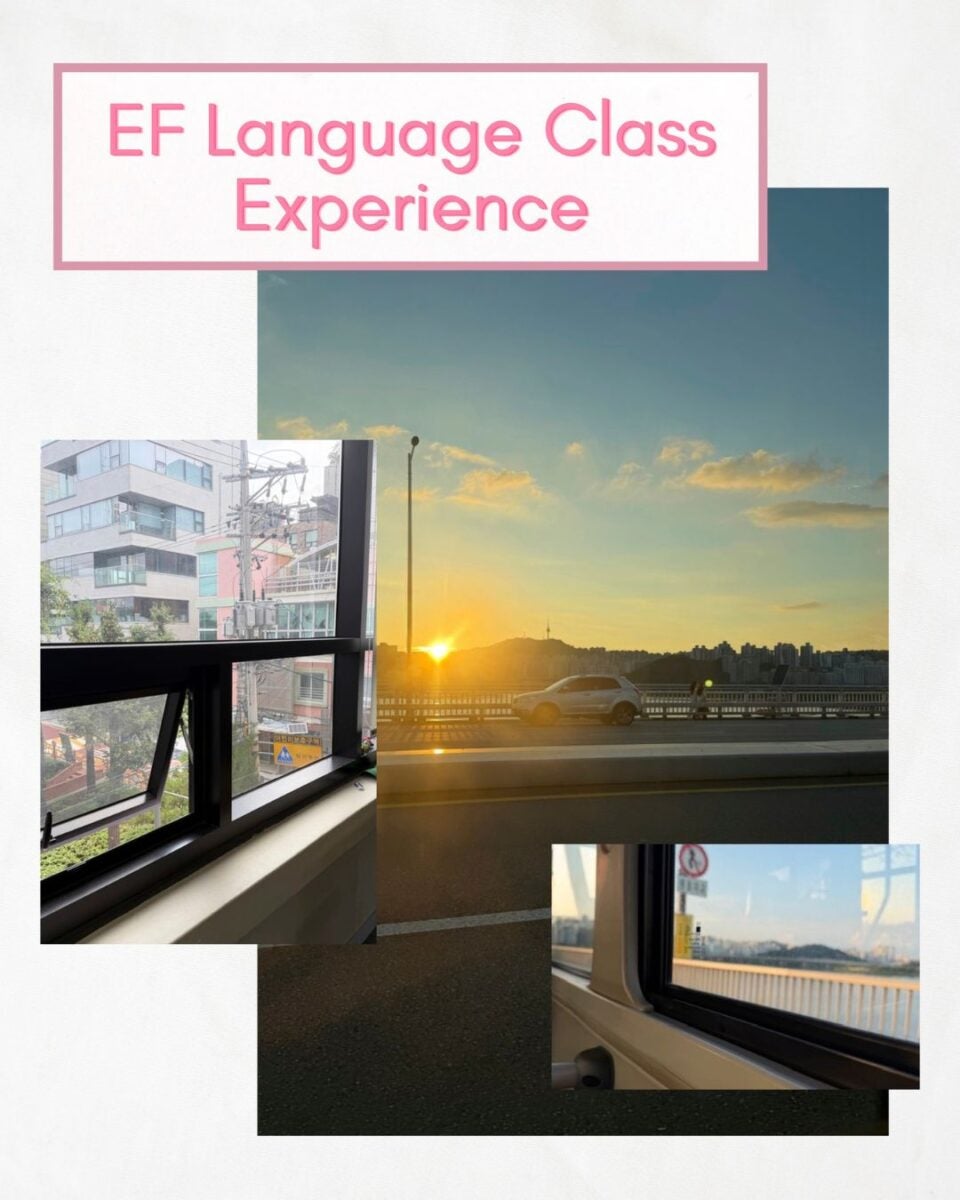
During the first week, the study abroad program included Korean language classes. These classes were divided into three levels based on students’ proficiency. Since I had no prior knowledge of Korean, I was placed in the beginner class.
Through the EF program, interactive teachers taught me by repeating sounds to help me memorize how each letter in the phonetic alphabet was pronounced. Later, I learned that the vowels and consonants in the alphabet were meant to fit together like puzzle pieces to create sounds used in words.
Soon, I began to learn phrases beyond just “annyeonghaseyo” or “kamsahamnida.” Instead, I learned the differences between “imnida” and “imnika,” and how “neun” (the equivalent of “is” in English) changes depending on whether the last syllable ends on a consonant or vowel.
These intricate parts of the language also made me realize its relevance to the country’s society. For instance, Hangul was created in response to Korea’s high illiteracy rate. Before Hangul, Koreans used Chinese characters to write. However, because the characters were complex, many commoners could not learn to read or write.
To address this disparity, King Sejong created a new phonetic alphabet that was easier to learn. In this creation, Hangul laid a modern foundation for Korea that signified equality and the spread of education. Learning this made me realize the beauty of learning a new language, as it became a valuable part of my cultural immersion in Korea.
Exploring the Seaside of Busan
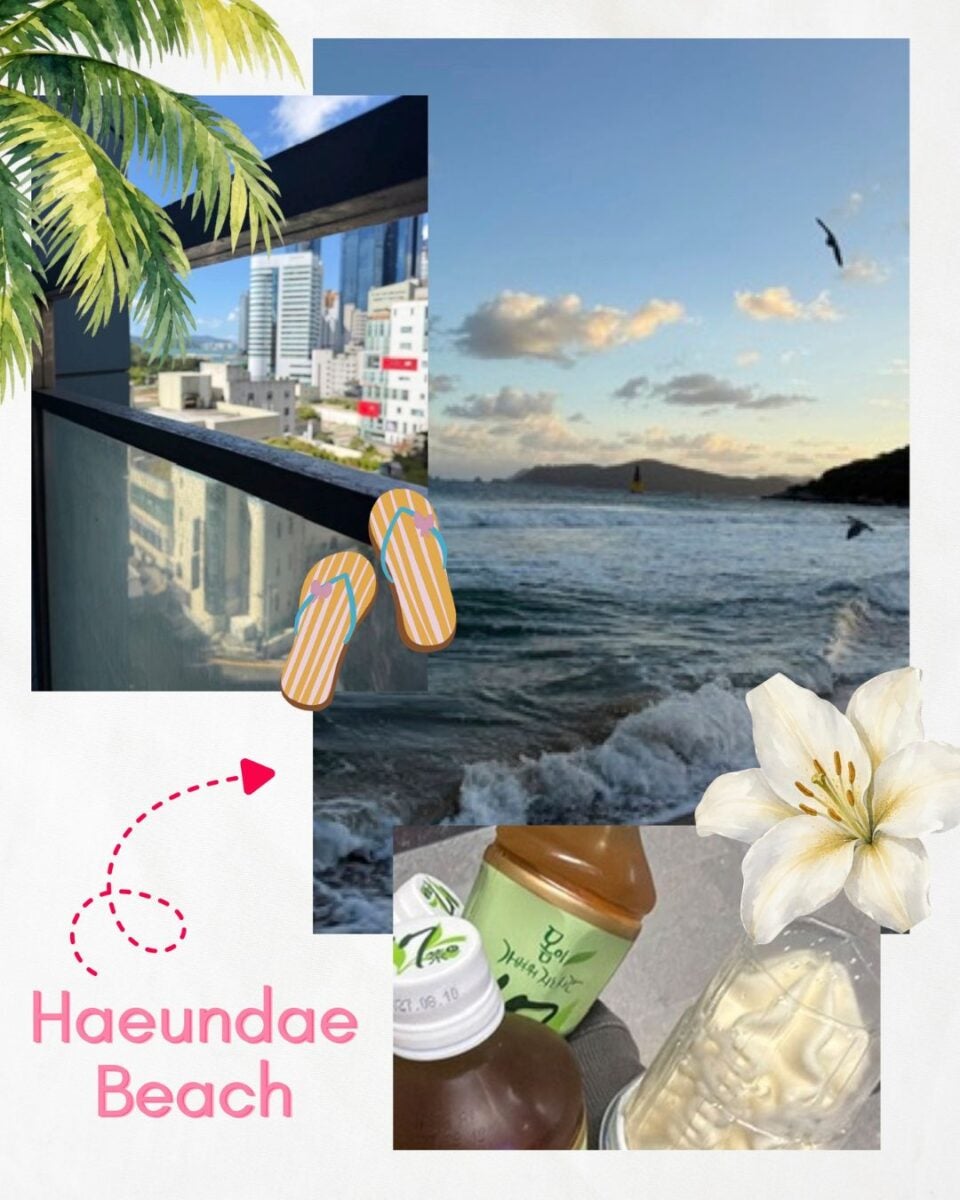
Through the program, my cohort was taken on an excursion to Busan. Before arriving, I had envisioned Busan to mostly be rural. However, I was surprised to find a vibrant urban environment instead. I later learned we were staying in Haeundae, a popular area for visitors who want to enjoy the seaside and seasonal festivals.
We stayed at Kwangsu Hotel, a seven-minute walk from Haeundae Beach. The beach is known for its wide 1.5-kilometer stretch. Unlike Seoul, with busy streets and high-tech buildings, Haeundae had several food stalls and local seafood restaurants.
On the first day, I stopped by a small Korean restaurant and bought seafood jjigae. Jjigae is a Korean stew that is often filled with kimchi, seafood, tofu, or a choice of meat.
After eating, I decided to go to Haeundae Beach. The beach had a vibrant shade of blue, and the white sand seemed to connect the overlapping buildings and the cliff to the right. Looking at the beautiful scenery, I understood why so many people visit Haeundae Beach.
Afterward, I decided to head over to the Haeundae Market, which traces its roots back to the early 1900’s. Despite Haeundae’s tall city buildings, the market held onto tradition through its crowded alleyways, selling fresh dried seafood and spicy rice cakes.
Later, after eating Korean BBQ, I craved something sweet. One of the good things about Korea is that after a savory meal, you can easily buy ice cream at any convenience store.
Finding Peace Through Bulguksa’s Experiential Temple Stay
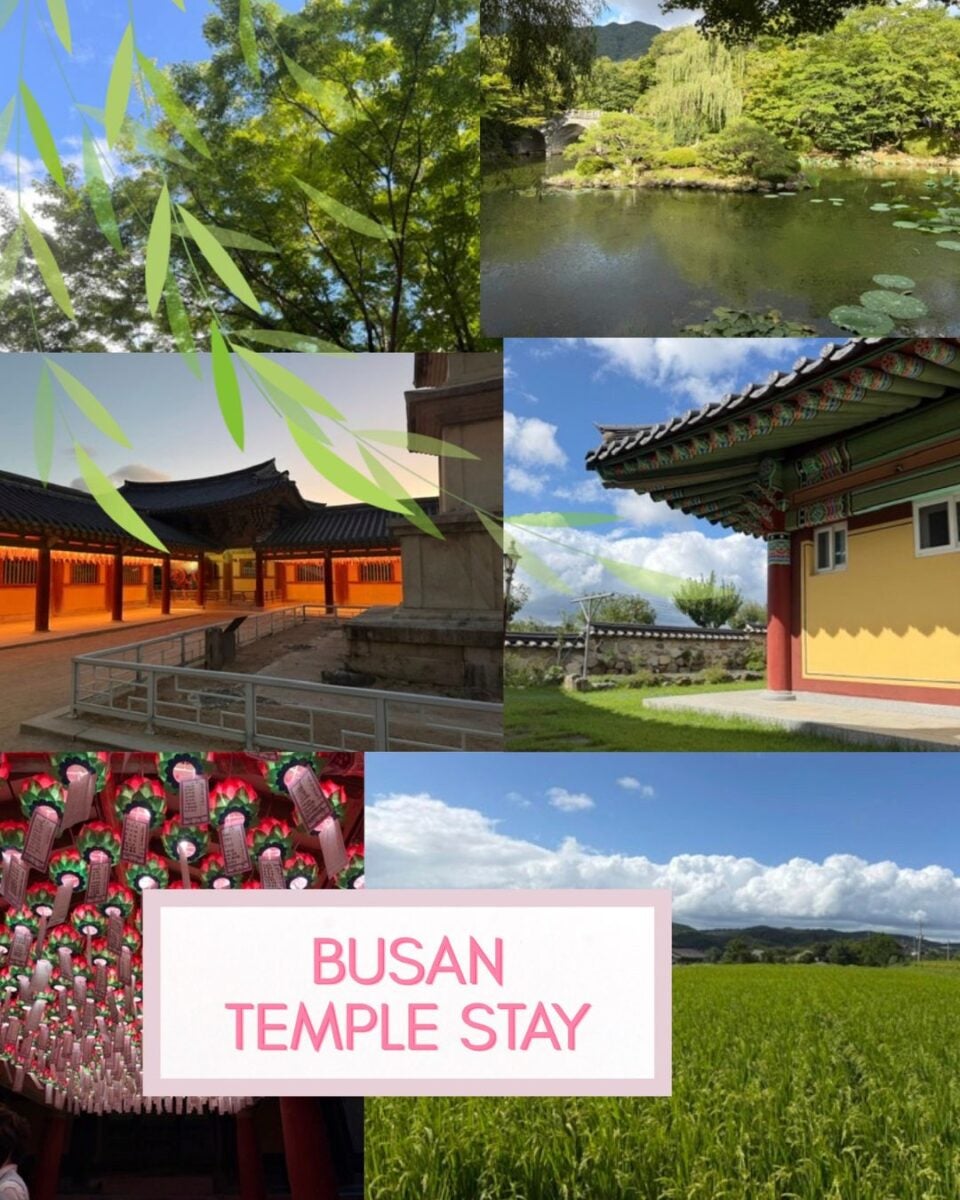
Just two hours from Haeundae, we stopped at Bulguksa Temple for an experiential stay that included 108 prostrations (worship posture), meditation, and a silent dinner.
Bulguksa Temple was built between almost 1,500 years ago and is designated a UNESCO World Heritage site. During this experience, I observed the monastic lifestyle of Buddhist monks and listened to various historical stories.
On arrival, we were given a temple uniform: grey pants and a matching blue vest. During the temple tour, I came across the Two Devas. The Two Devas are figures carved into the entrance walls of Seokguram Grotto and are regarded as guardians of the Bulguksa Temple.
While the two guardians looked intimidating, learning that they protect the temple from evil forces ultimately brought me peace.
After the tour, we ate a silent dinner which included kimchi, rice, seasoned bean sprouts, seaweed and mushrooms. The cafeteria food choices are vegan, fitting the diet of monks who live at Bulguksa Temple. Together, the dishes made a meal that tasted like a popular Korean dish: bibimbap. It was delicious!
At night, the 108 prostrations began. Each bow starts with standing, bringing your hands together (hapchang), and then going to your knees to touch your forehead to the floor. The number 108 represents the 108 kleshas, the mental states or defilements that cloud the mind and cause suffering in Buddhist philosophy.
Doing the prostrations allows people to let go of their ego and attachments. Although my legs felt sore for the next two days, I was grateful to experience the lifestyle and gained more respect for those who commit their time to Buddhist practices.
Making Memories Through Food
I’m going to end this blog with my favorite part — the food. Food is always the highlight of any trip, and in Korea, it has definitely been number one.
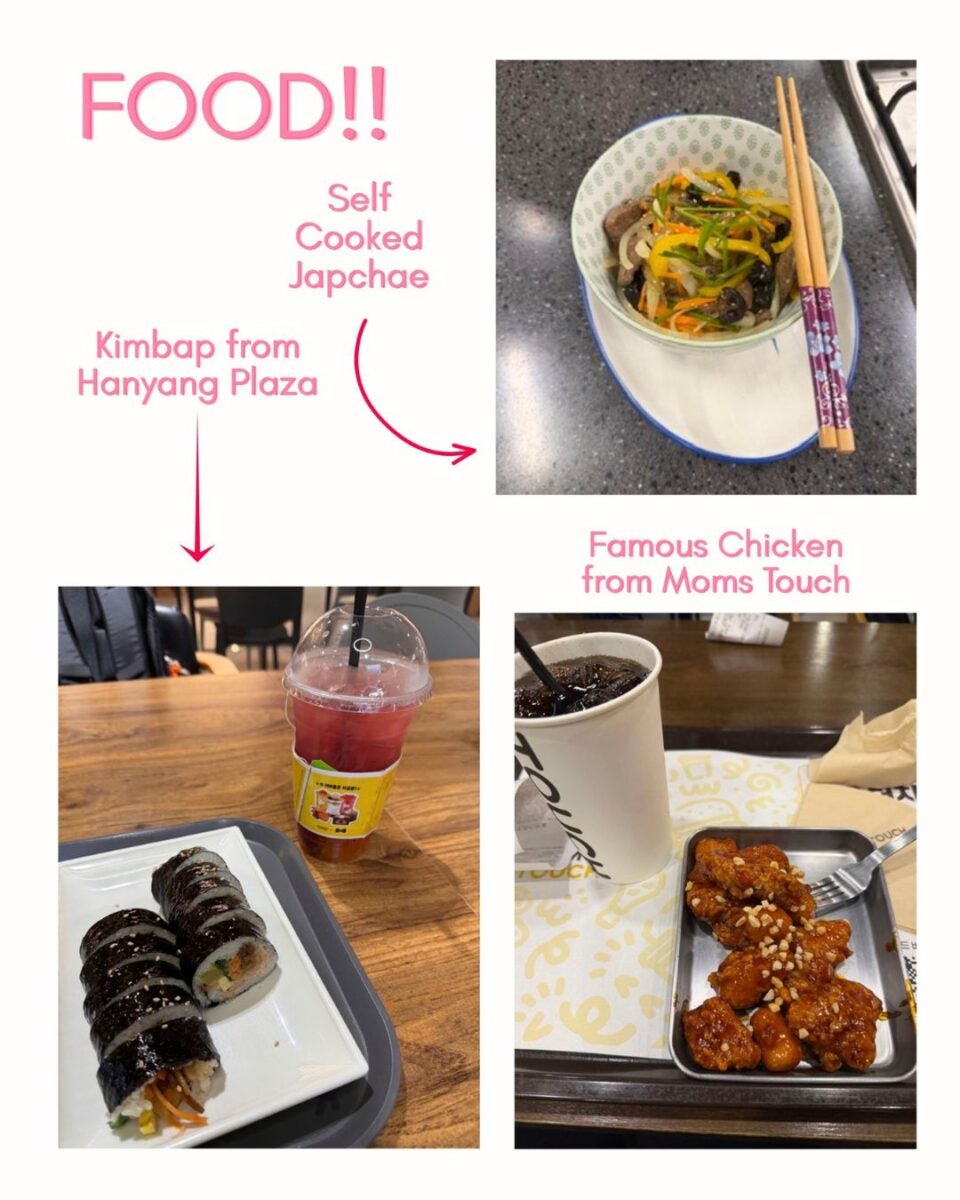
During the second week, my cohort was taken to cooking lessons to learn how to make kimbap and japchae. Japchae is a savory dish made with glass noodles mixed with different vegetables of choice. My roommate and I placed second in a kimbap-making competition, which made us feel like Michelin chefs.
As a university student, I often eat lunch at Hanyang Plaza, where I always choose the same thing: kimbap and tea. Other times, I eat at Mom’s Touch, a famous Korean chicken restaurant.
One observation I made of the food in Korea is that everything is sweet! Growing up in America, my taste buds are used to savory and salty foods. So, it’s been interesting to notice Korea’s food culture.
As I continue my study abroad, I hope to gain more unique experiences. Whether it is the traditional parts or the amazing pop music, Korea has taught me a lot about myself in the past few weeks. For the rest of my journey, I want to absorb the culture while taking the opportunity to appreciate the traditional aspects of Korea and its modern parts as well.
This post was contributed by Hanna Abe, a Global Ambassador for Fall 2026. Hanna is a freshman participating in the Take the World by the Horns program in partnership with Hanyang University in Seoul, South Korea.