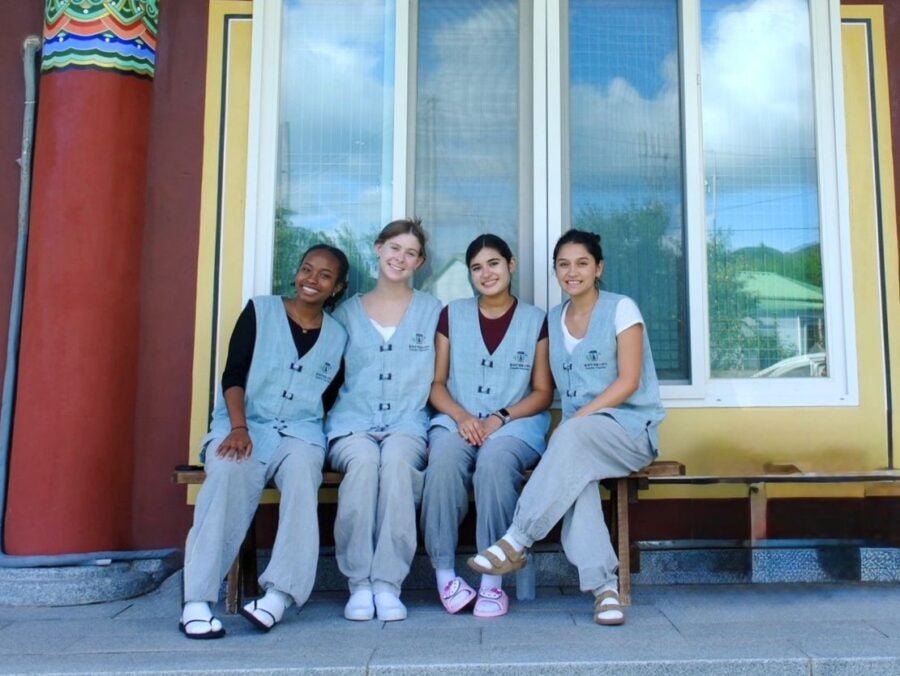

What comes to mind first when you think about your experience studying abroad?
You might be thinking about making friends with people in your program, traveling across countries, and even indulging in the gastronomy of your host country.
What you might skip is how to tackle these new experiences when you’re not in the ideal headspace. From experience, struggling with mental health became my reality despite not having “mentally” prepared for it. The glitz and glamour of studying abroad comes with the reality of experiencing new “firsts” while not feeling my best internally.
From my own personal experience, I thought that the idea of studying in Spain and away from responsibilities would stave off any mental or emotional issues I had going during my program. But contrary to that belief, underlying insecurities and unexpected experiences created an almost unmanageable load to carry. Though it was my second study abroad experience, I still came out with more wisdom and confidence in navigating those difficult moments.
With that, I want to share a few bits and tricks that might help if you’re getting ready to study abroad, or if you’re already in your program and struggling with your mental health.
Homesickness is Normal
Let’s address the first elephant in the room: nearly everyone gets homesick while studying abroad, so it’s normal for a wave of it to hit you at some point during your program.
The main takeaway here is that homesickness is something that’s part of the adjustment process, not something that you need to just get over. Getting through this feeling means finding a balance between staying connected to home and giving yourself space to enjoy being abroad.
Having familiar people to turn to may also be part of your process. A few scheduled calls with loved ones, or even just sending updates about your journey, can help ease the weight of being away from what’s familiar.
Additionally, creating a routine helps provide stability as you navigate an unfamiliar space. This might look like scheduling time to walk around the city, watch a comfort show after a long day of class, or keep up a manageable hobby.
Another important component is giving yourself grace to feel homesick. But what you don’t want is to allow yourself to linger in that feeling to the point of missing out on the experiences around you.
You Don’t Need to Do Everything to Enjoy Your Experience
“Comparison is the thief of joy” becomes especially relevant when you feel pressure to travel every weekend, visit every landmark, attend every event, and always have something exciting to share. And unfortunately, social media can make this pressure even stronger.
Still, it is more than realistic to have an enjoyable, life-changing experience without taking every available opportunity—especially when money comes into the conversation.
Meaningful experiences don’t have to look like visiting a neighboring country every weekend, though they can still be amazing. You can still find enjoyment and meaning in smaller-scale activities: having dinner with friends, exploring your neighborhood, or becoming a regular at a local restaurant or cafe.
Remember, you don’t have to see everything, go everywhere, or say yes to every opportunity for your time abroad to be worthwhile. Rest is just as important abroad as it is back home.
Be Open to the Unexpected
As with any new opportunity, it’s natural to have your own expectations for what your experience will look like, from the friendships you’ll make to the places you’ll visit. However, things don’t always go according to plan, and that’s okay!
You might hear bad news from back home, struggle to adjust to cultural differences, or find that a certain experience you were looking forward to doesn’t meet your expectations. It’s in these moments that you need to see these experiences not as disappointments, but as moments to allow yourself to adapt and see what you can learn from them.
This might be finding solace in unfamiliar people, like new friends or even professors from some of your courses. It could also mean letting go of the pressure to have everything figured out. Adjusting to a new environment is rarely linear; it comes with moments of growth, uncertainty, and setbacks, each of which helps you find your footing.
All in all, it’s important to remember that your study abroad experience doesn’t have to unfold exactly as you imagined for it to be meaningful. Give yourself permission to grow, adapt, and experience things as they come.
Ultimately, studying abroad is more than just the places you visit or the countless memories you make. It’s also about getting comfortable navigating unfamiliar situations, understanding yourself in new ways, and remembering to give yourself grace when things don’t go as planned. You may experience moments of homesickness, uncertainty, or even grief, and all of those are okay. Not every moment needs to be booked and busy to be meaningful. Sometimes, one of the most valuable parts of studying abroad is learning how to take care of yourself along the way.
This blog post was contributed by Heavenly-Jade Diamba, Fall 2026 Peer Mentor. Heavenly-Jade is a Sociology and History fourth-year student who studied abroad through the Language and Culture faculty-led program in Santander, Spain (Summer 2026).