
Before I could even introduce myself, I was asked a simple question: “B’sukar aw bla sukr?” (With sugar or without?)
Every morning in Rabat, Morocco, began with a glass of atay (tea), and every evening seemed to end the same way. Before I ever finished one cup, it was already refilled and poured from up above, forming the soft foam that marked it as ready. At first, I thought it was just a delicious drink. It didn’t take long to realize it was something much more.
Atay means hospitality before conversation, care before introduction, and an invitation to slow down.
Shared around tables and offered to complete strangers and loved ones alike, it became essential to my month in Morocco. I quickly learned that some of the country’s deepest traditions weren’t always found in monuments or museums but in ordinary moments repeated daily until they became familiar.
Expectations
Before coming to Morocco, I thought I had a reasonable idea of what to expect. I studied Middle Eastern and North African history at The University of Texas at Austin, had friends from across North Africa, and had heard countless stories about life in the region.
Originally, our program was set to take place in Amman, Jordan. When plans changed and we were moved to Rabat, I was disappointed. I visualized Jordan for months, while Morocco felt unfamiliar and almost boring. I imagined Morocco feeling more curated than immersive, like a place I would observe rather than experience.
I couldn’t have been more wrong.
Hospitality and Daily Life
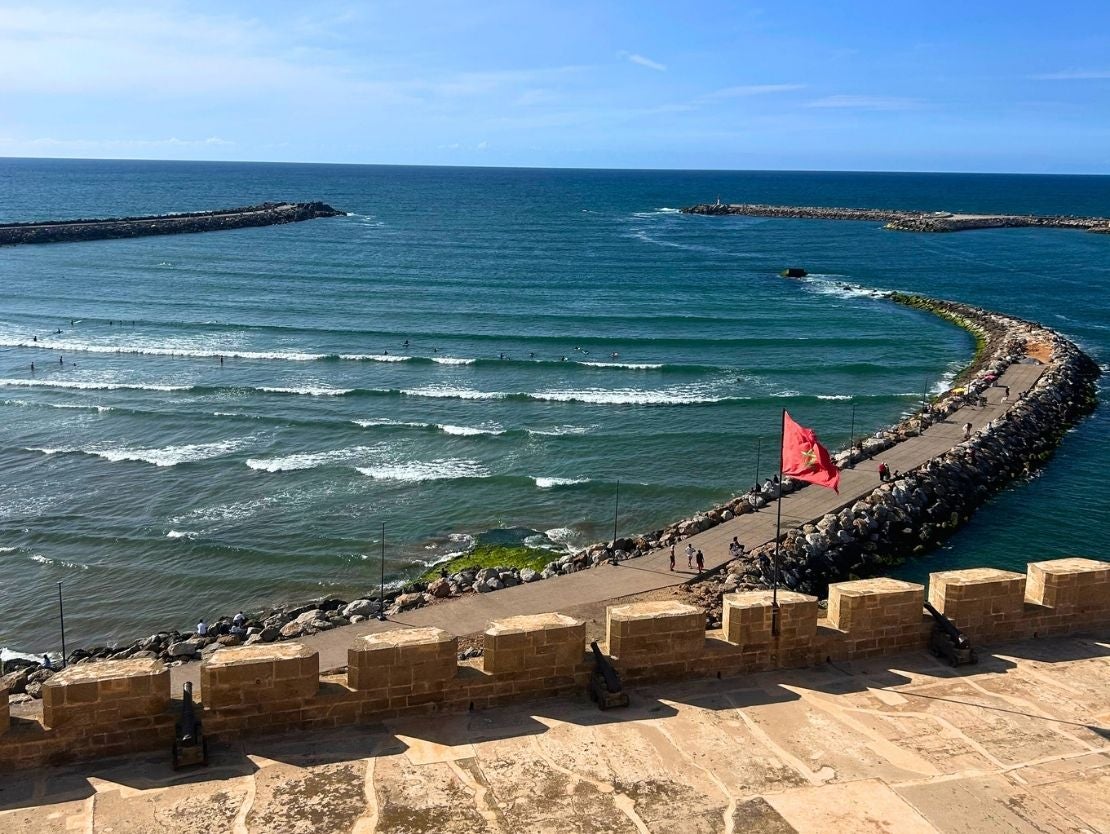
I lived with my host family in a two-bedroom home inside the Kasbah of the Udayas, one of Rabat’s oldest neighborhoods overlooking the Atlantic Ocean. The space never felt small. Somehow, there was always room for another plate, another guest, another glass of atay.
Every morning began with “Sabah l-kheir bnti Elizabeth” (Good morning, my daughter Elizabeth). Breakfast was always ready: fresh msemen (traditional, flaky, square-shaped Moroccan flatbread), cream cheese, and honey. Every evening ended the same way, gathered around a round table where meals were shared rather than served individually.
My host parents, Mama Khadija and Mama Fatema, sisters, never treated my classmate and me like temporary guests. Even when they were tired, they insisted we eat more. When I said “Ana shba’t” (I’m full), another spoonful would appear anyway, followed by laughter.
I learned more about the Darija language at that table than anywhere else. How to refuse politely, how to accept insistence, how to laugh when refusal clearly wasn’t an option. Before every meal, someone would say “B’saha w raha” (with health and comfort). It isn’t only a phrase; it’s a way of reminding you that eating is not individual but shared.
Some of the most memorable moments were also the simplest. I cooked vegetable tajine, couscous, baghrir, and harsha with Mama Fatema, who was herself a university student. Learning the steps behind each dish changed how I understood them.
A Country of Layers
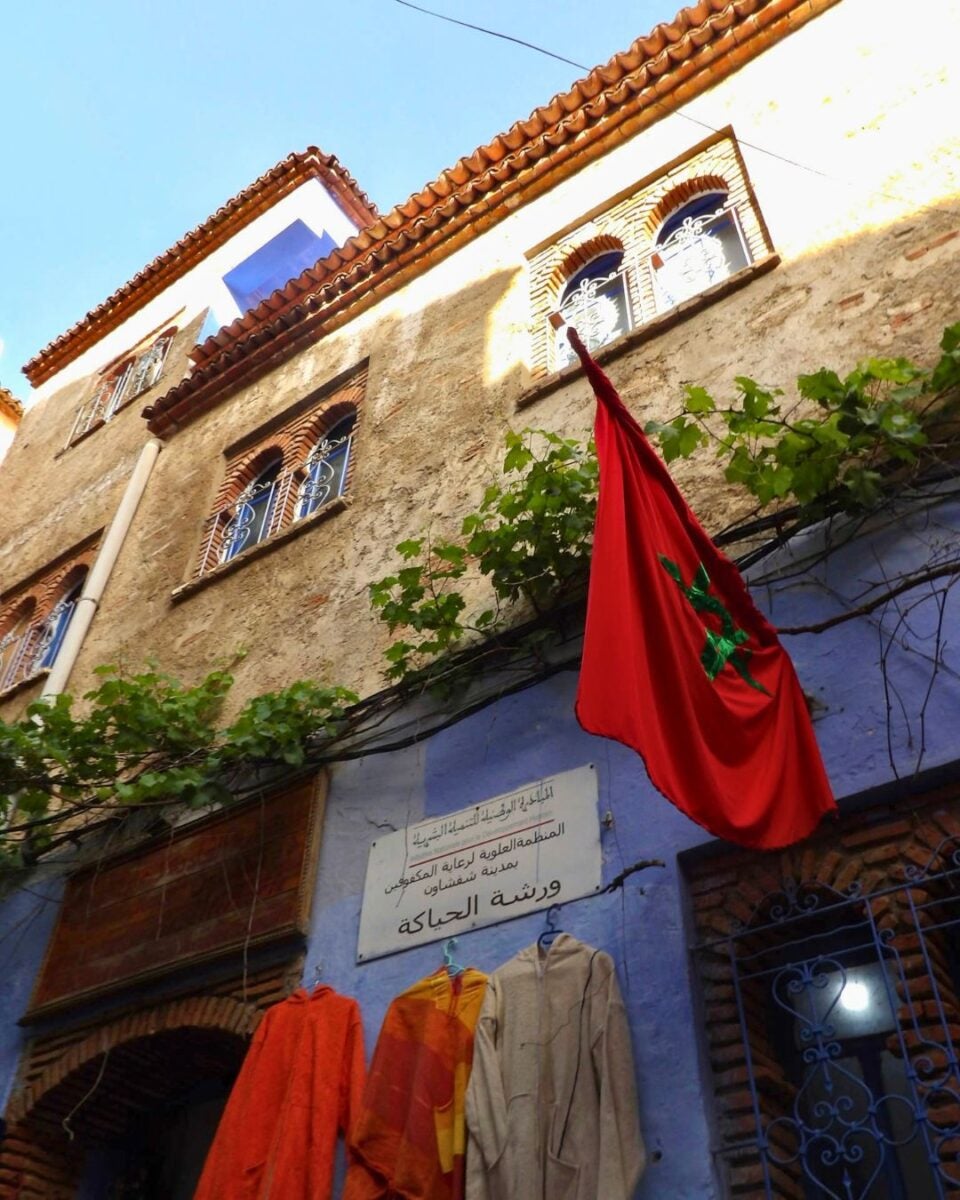
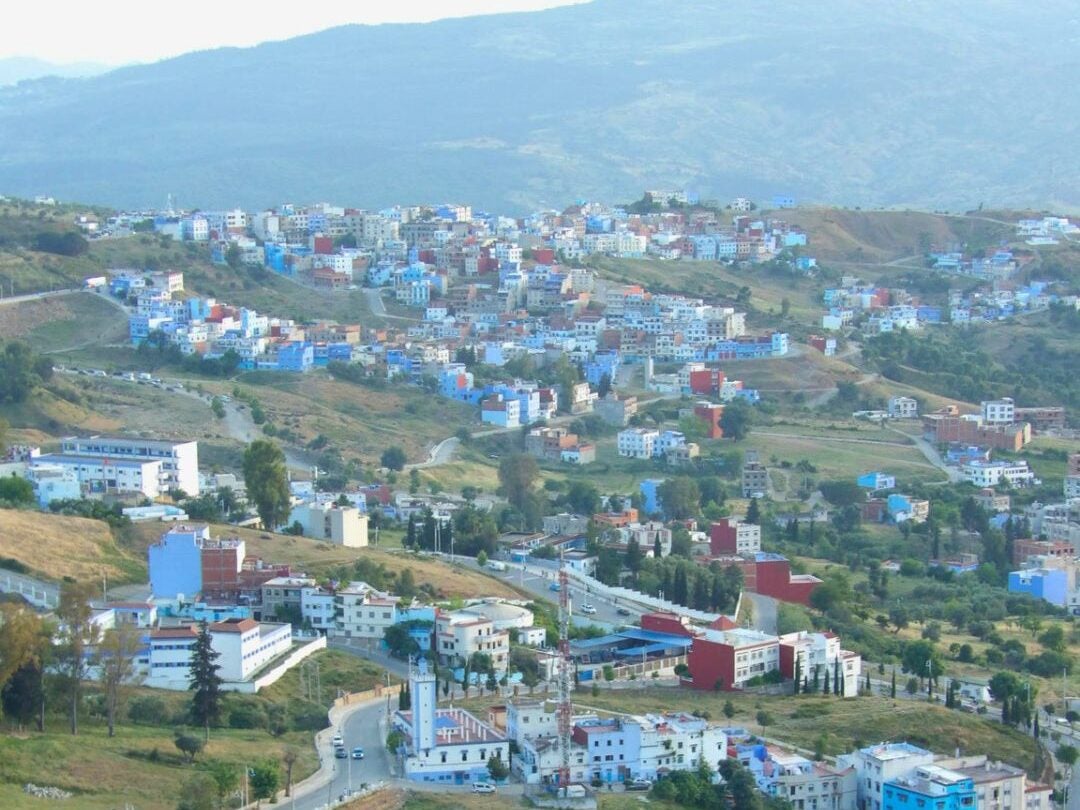
Although Rabat was home, our excursions showed me there is no single version of Morocco. We traveled through the Atlas Mountains, visited Amazigh communities, wandered the blue streets of Chefchaouen, explored Marrakech and Tangier, and crossed landscapes that shifted from coastline to mountains to desert.
Just as the geography changed, so did people’s stories. Some identified as Amazigh, others as Arab, others as both. Every region carried its own history, traditions, and dialect. Rather than confirming what I thought I knew, Morocco continually reminded me that identity is layered and cannot be reduced to a single narrative.
That complexity became even clearer through language. Conversations flowed between Darija, Arabic, French, Spanish, English, and whatever hand gestures filled the gaps. To my content, many people initially assumed I was Moroccan. When they learned I was Mexican, I was immediately met with excitement and praise for coming so far and making an effort to live the culture and speak their language.
What stayed with me most was how language stopped being a barrier. Initially, I felt frustrated not fully knowing Arabic, French, or Darija, but because so many people know all three, I could piece them together to carry on a conversation. It was complex yet so satisfying; I had never before experienced a conversation in three languages.
Darija itself became one of my favorite teachers. It reflects centuries of colonialism, revolution, resistance, and culture, with traces of Tamazight, Arabic, French, and Spanish, preserving Morocco’s history in everyday conversation. Sometimes I recognized an Arabic root, sometimes a French word, and sometimes something entirely unfamiliar.
Faith and Connections
As a Muslim, I expected Morocco to feel familiar. I didn’t expect practicing my faith to feel so effortless.
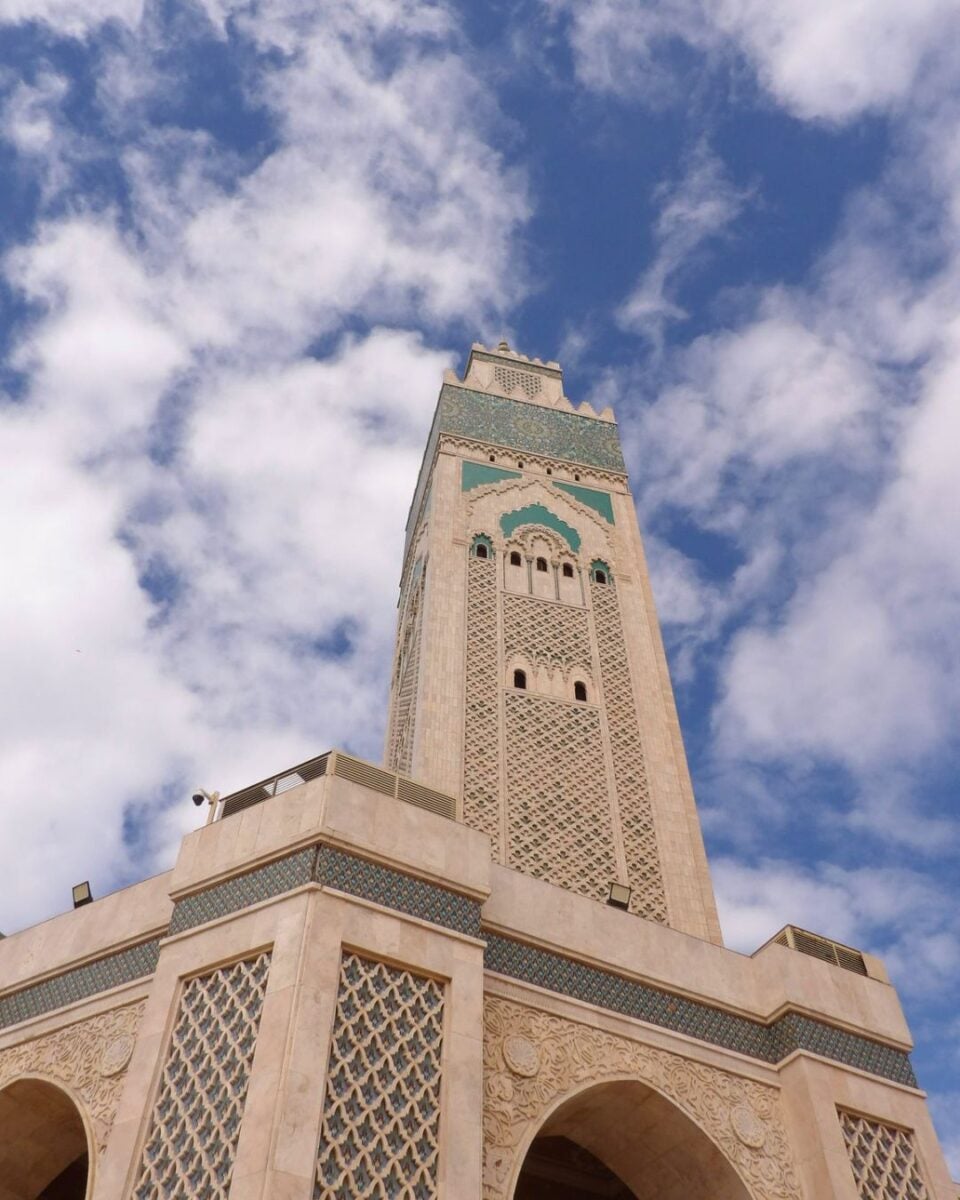
In Texas, prayer often requires planning. In Morocco, the adhan (call to prayer) echoed through cities and mountain villages alike, quietly organizing the day. Lunch breaks became opportunities to walk to the mosque, while everyday conversations naturally included “Inshallah” and “Alhamdulillah.”
At the same time, I discovered there is no single way to live Islam. Moroccan religious life reflects Amazigh heritage, local customs, and centuries of scholarship. The faith was familiar, yet its expression was uniquely Moroccan.
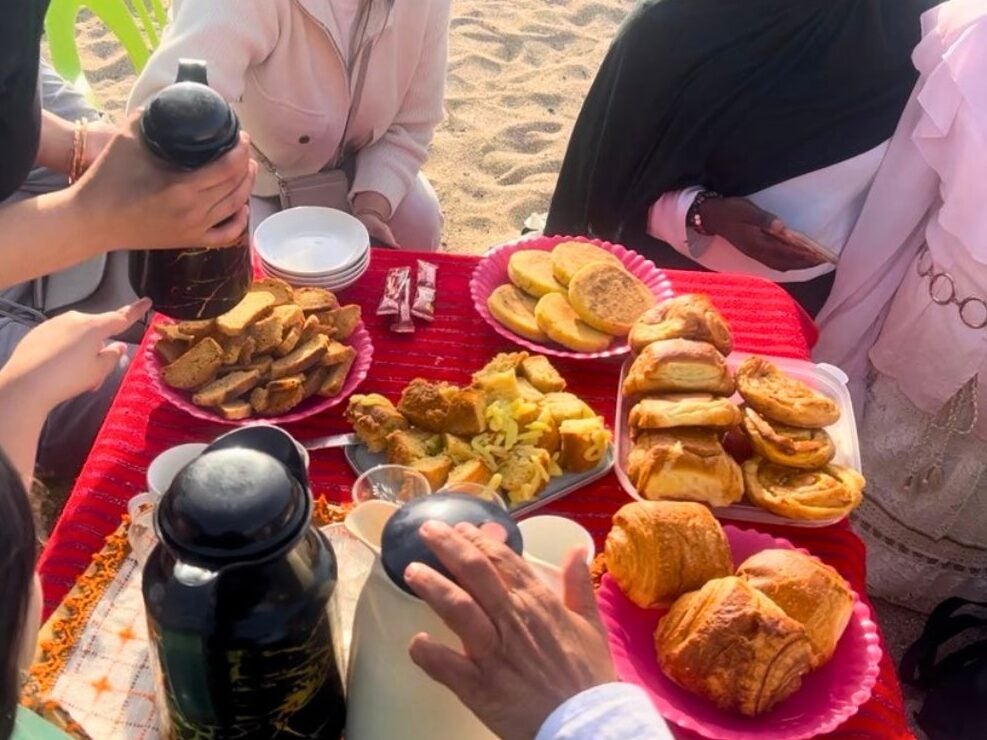
Some of my strongest connections also happened through football. Whether on beaches or neighborhood fields, language quickly became secondary. Passing, laughing, and playing together created friendships long before we shared the same vocabulary. Football reminded me that connection often begins long before conversation does.
Belonging
Looking back, what surprised me most wasn’t how different Morocco was; it was how familiar it often felt. Despite being separated by an ocean, Moroccan and Mexican cultures shared values I immediately recognized: hospitality, close families, long conversations, and an instinct to make strangers feel at home.
I arrived expecting differences. Instead, I found reflections of generosity, community, faith, and care. Morocco challenged not only what I knew about North Africa, but also how I think about belonging itself.
When I first arrived, “B’sukar aw bla sukr?” sounded like a simple question about tea. By the time I left, I understood it was never really about tea. It was about the quiet ways people choose to welcome one another.
This blog was contributed by Elizabeth Pompa, Global Ambassador for May 2026. Elizabeth is a College of Liberal Arts sophomore participating in an affiliate program with CIEE in Rabat, Morocco.
I love this so much and I love your brain. Miss you