Studying biology and French at The University of Texas at Austin is a dream come true. I’ve developed so much as a person over the past two years as a Longhorn. However, I recently caught myself running in the rat race of prioritizing my GPA and extracurriculars over investing time in meaningful relationships and new experiences. Studying evolution in Seville, Spain, allowed me to reinvest my energy and reevaluate my life goals.
Unlike my large science classes on the Forty Acres, I get to see the same 18 faces every day. Monday through Thursday mornings, we meet at the beautiful Universidad de Sevilla, an 18th-century tobacco factory-turned-university. When class ends, we go grab tapas or one-euro tacos together before visiting a landmark, playing pool in the basement of our residencia, or studying for our next test. It’s no surprise; it only took a few weeks for this group of strangers to become my best friends.
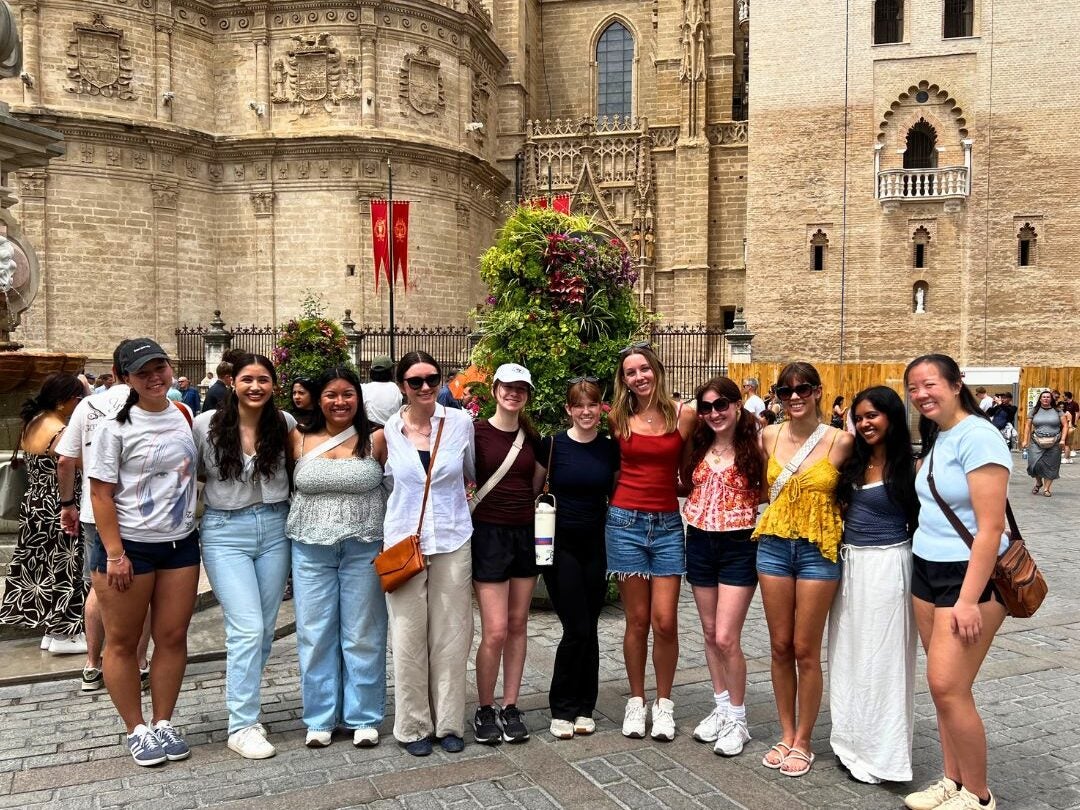
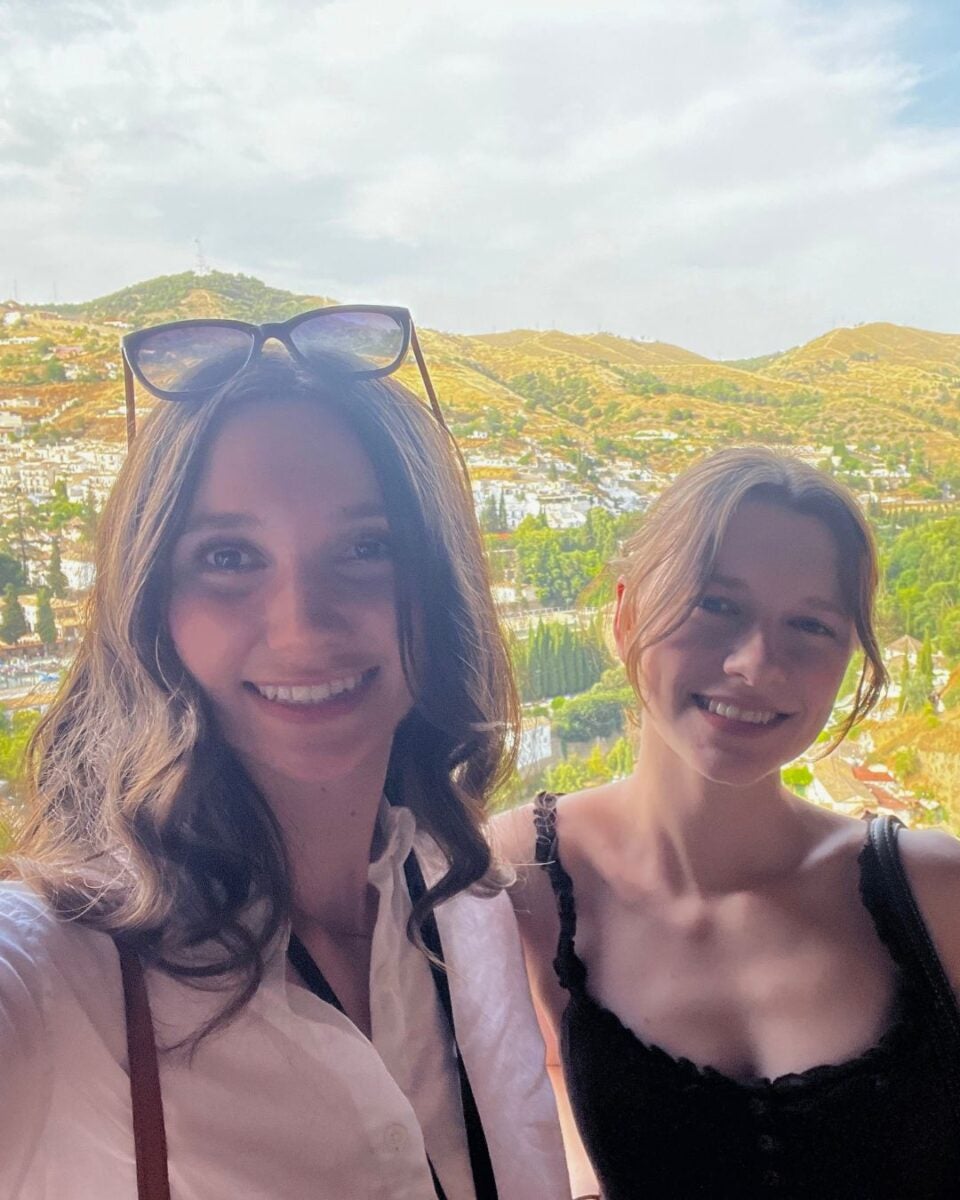
Together, we explored Madrid for a weekend, baked bread from scratch in Grazalema, strolled through the gardens of The Alhambra in Granada, and soaked up the Atlantic Ocean in Cádiz through our program’s itinerary.
While we’ve visited all these breathtaking cultural and natural spectacles, the mundane moments of exchanging inside jokes and sharing meals remain my fondest memories. Some of my favorite memories involve immersing ourselves in Spanish culture, such as flamenco and bullfighting, and then reflecting on how these traditions overlap with our backgrounds and the roles we play on the global stage.
The day after arriving in Seville, the capital of flamenco, we attended a dance show in an unassuming basement venue. The two dancers, playing a couple, used limbs, castanets, and nail-embedded heels to create a rhythmic yet passionate soundscape, accompanied by a singer and guitarist, who, unlike the other performers, had no breaks.
After the performance, we brainstormed what the story might have been. While I was completely oblivious to any plotline, having focused instead on the sensory details and audience reaction, one friend won us over with his interpretation that the woman in the couple was the one who died, only to come back as an angel in the final scene. Regardless of the story, we left the venue with the contagious energy the performers imbued in us, allowing us to forget our jet lag for the day.
The next week, my cohort attended Seville’s last bullfight of the season in the Plaza de Toros de la Real Maestranza de Caballería de Sevilla. As I walked through the bullring, I couldn’t help but think of Darrell K Royal-Texas Memorial Stadium. I was handed a white handkerchief branded with star matador Manuel Olivero’s face, who we would later watch be thrown to the ground by the bull twice, somehow escaping with minimal injury.
Similar to flamenco, the crowd participates with enthusiasm, waving the handkerchiefs and shouting “¡olé!” At the same time, the matador appears to control the bull like a puppet, weaving in and out between the red flag and the bull’s horns. Watching the first bull get killed jarred us and other tourists, many of whom decided to leave early.
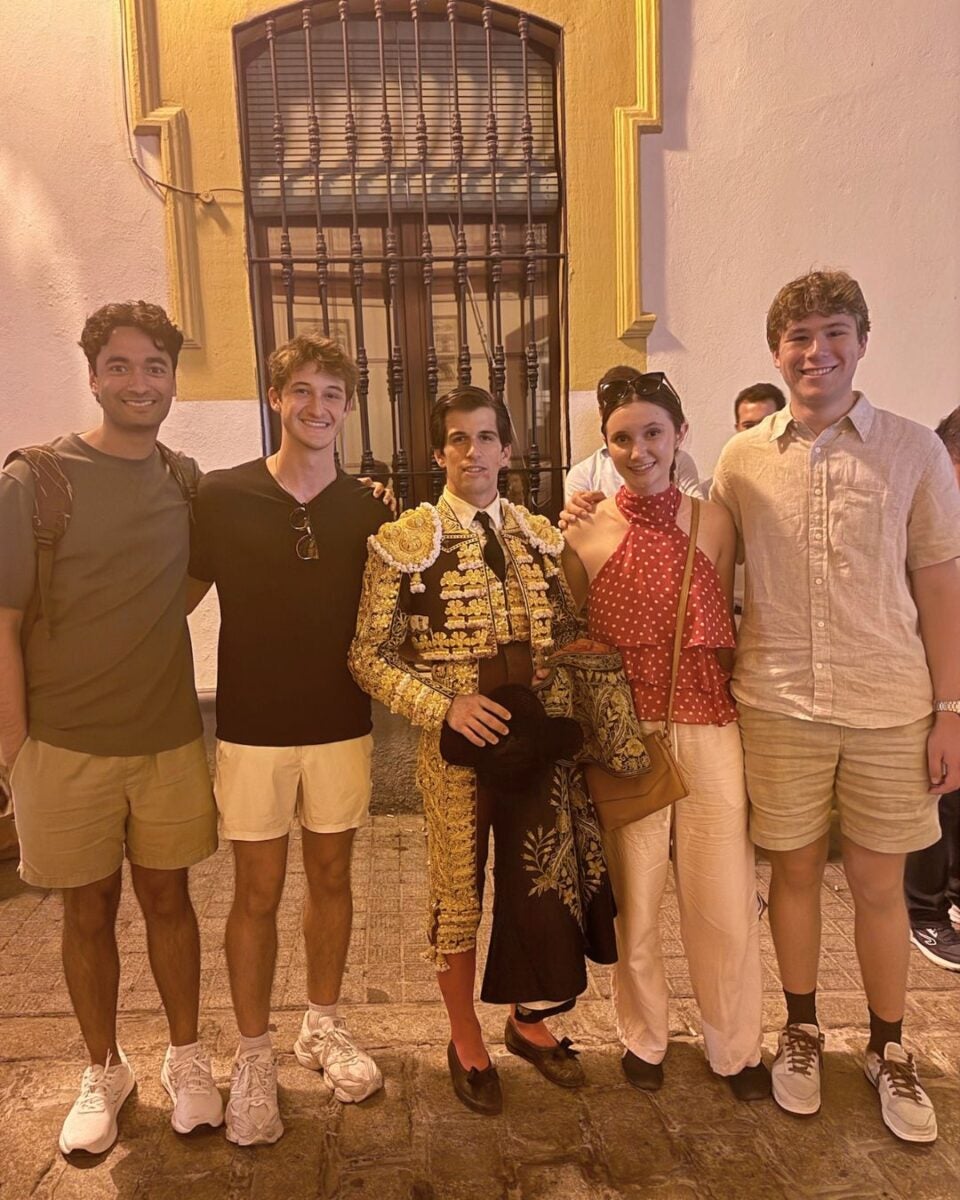
By the sixth bull, we had gotten used to the process and could appreciate the entertainment in the tradition. Once the spectacle ended, we flooded into the streets and waited in line to meet Manuel Olivero, who everyone was showering with hugs.
Reflecting back on studying in Seville and looking forward to returning to Austin, I’m determined to maintain my newfound friendships, say yes to new experiences, and get more comfortable with being uncomfortable.
This blog was contributed by Alexandra Donea, Global Ambassador for Summer 2026. Alexandra is a College of Liberal Arts junior participating in the faculty-led program “Evolution: An International and Cultural Perspective” in Seville, Spain.