
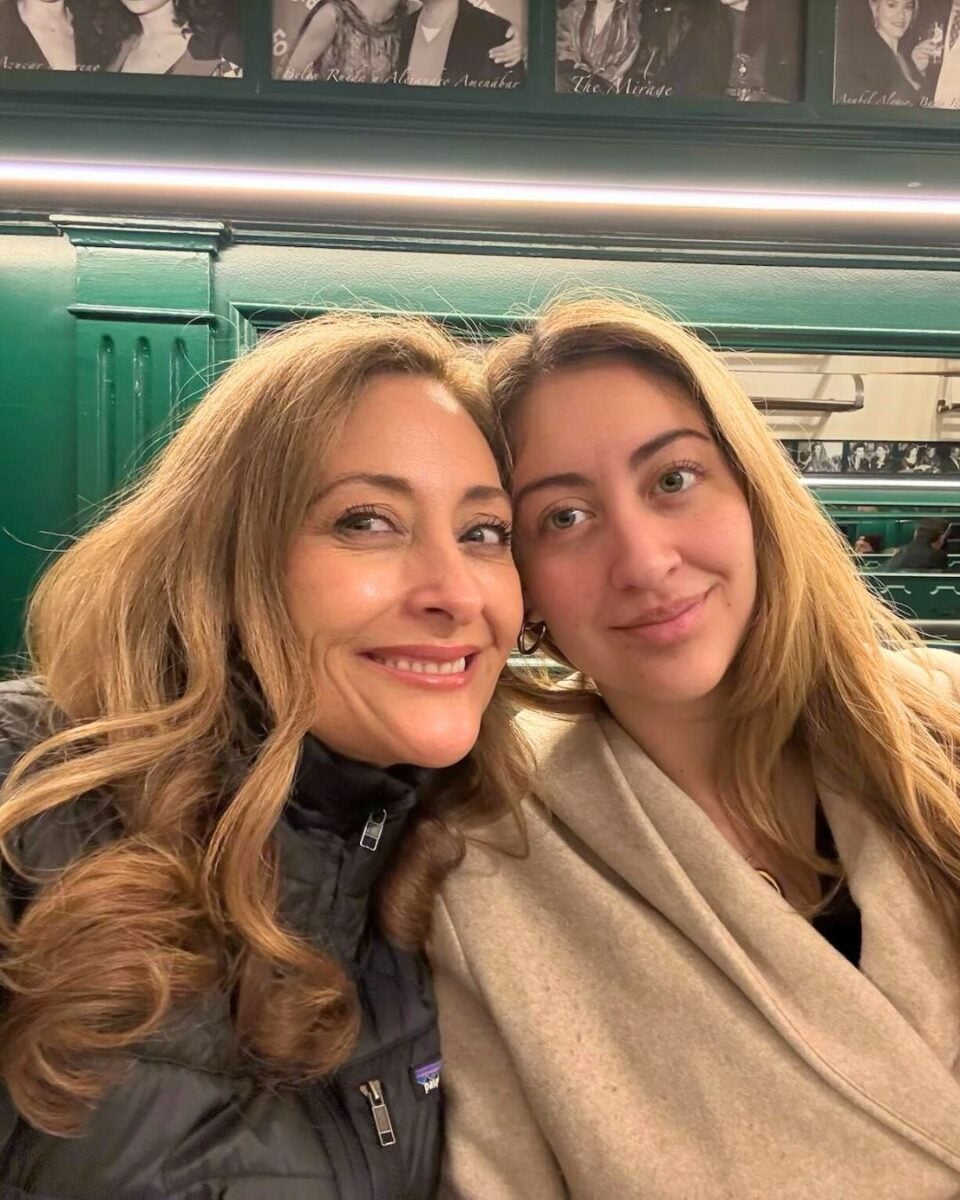
After my mom learned a work trip would bring her to London, she decided to come see me in Madrid. A quick, two-day visit, far out enough that I would probably live a thousand lives before she arrived. Thus, the date quietly loomed in the back of my mind, distant and abstract, until I suddenly got the text that she was waiting outside my apartment building.
Here she was, my wonderful, familiar mother, the face my own mirrors. It had been well over a month since I had last been with her, yet seeing my parents has always been one of those strange experiences where it feels like no time has passed.
“Come in, come in” — I urged her. Like breaking a seal. You, this entity of my past, my home, my identity. Come into my world here.
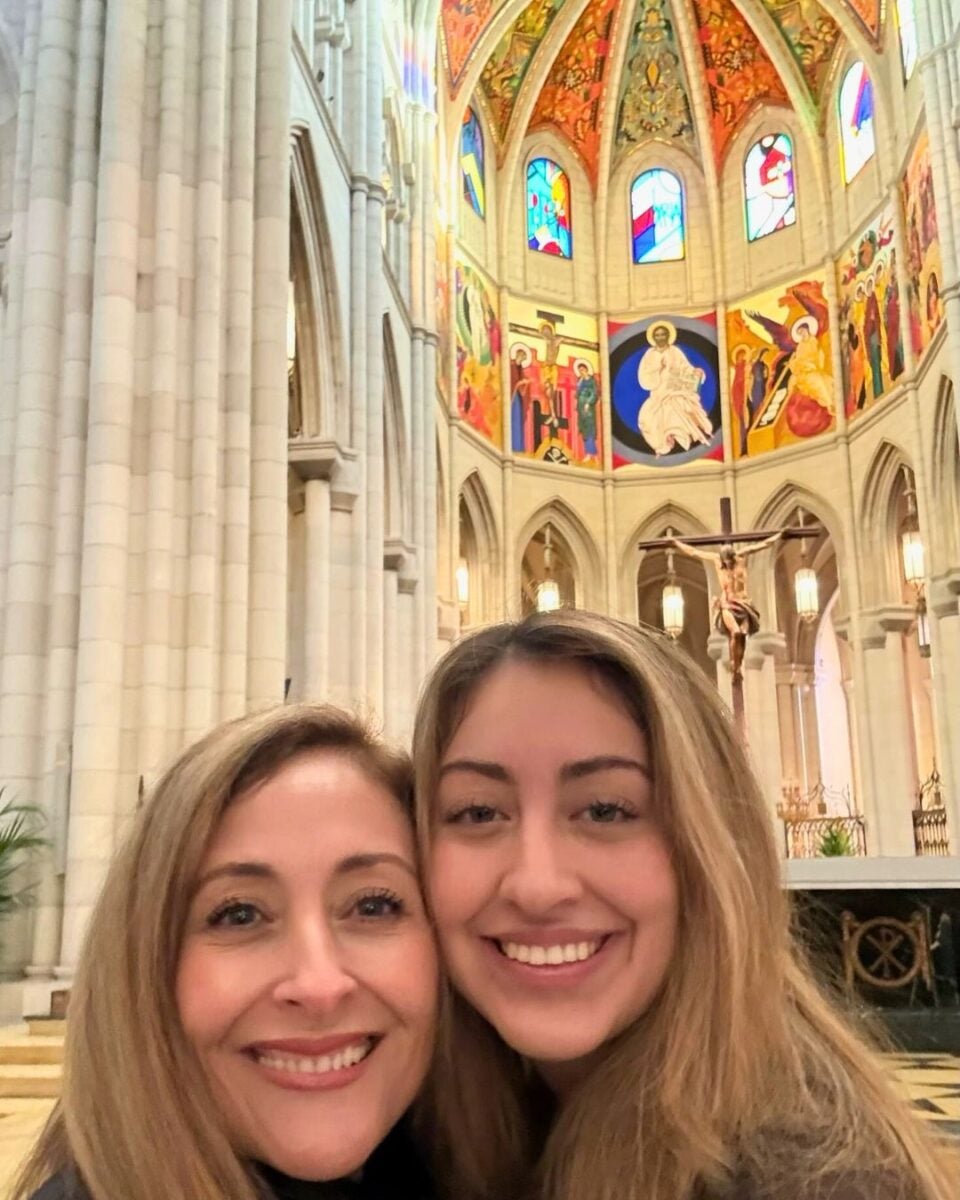
We left almost immediately, afraid jet lag might overtake her, and our first stop was the Almudena Cathedral. It sits directly across from the Royal Palace, which our Bolt driver explained is the largest functioning royal palace in Western Europe. I was no stranger to cathedrals and had already visited this one, but inside, my mother’s awe was contagious. The towering ceilings, the modern fresco colors, everything made spectacular again in her eyes. Like me, it was her first time in Spain, and her reaction mirrored the childlike wonder that had defined my first days. I felt almost foolish for growing accustomed to the surrealness of living across the world in such a different and marvelous city. It is easy for this place to resemble permanence, as though this will always be my life. But it will not.
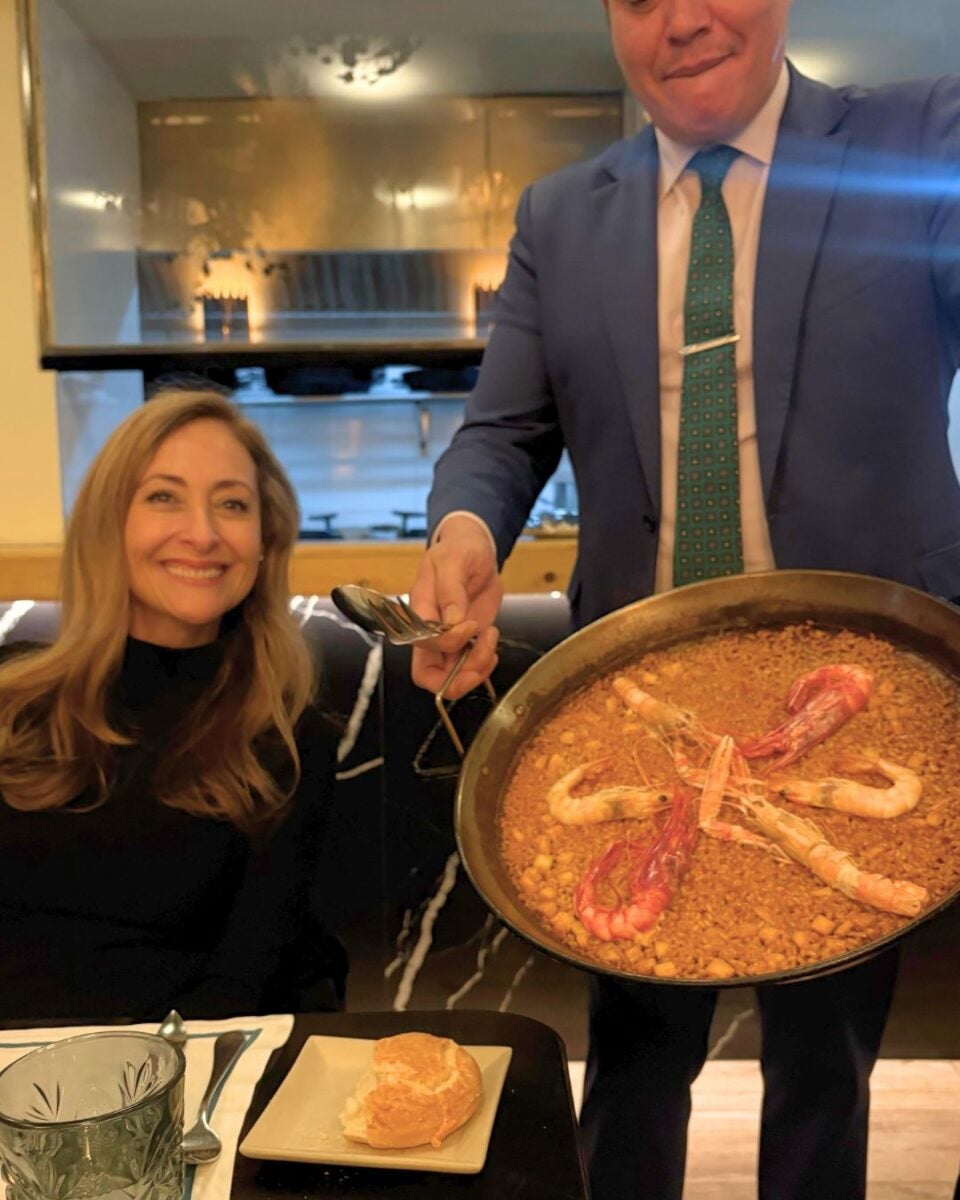
My mother grew up in Riobamba, Ecuador, raised Catholic in a country shaped by Spanish colonialism. Catholicism remains the predominant religion in Ecuador, woven in daily life, though time in the States gradually guided my mom toward Protestantism. Still, she admitted she sometimes misses the ritual of Catholicism, the profoundly communal tradition.
My university here, Universidad Pontificia Comillas, actually has its own chapel, though I have not properly explored it. The campus layout is distinctly Spanish, with square looped hallways enclosing inner courtyards that serve as soccer courts. My mom recognized the design instantly; her school in Riobamba had been built the same way. Only Comillas’ brilliant blue wall tiles distinguished it, an iconic detail that has since become synonymous with the school.
The overlap of past and present became a consistent theme as we explored the city. Everything reminded my mother of home: Plaza Major, the balcony-lined streets, the old stone churches. “This looks like Quito,” she would say, referencing Ecuador’s capital. “This must be why it is like that.” She must have pointed to a million things. This, and this, and this. Three hundred years of Spanish rule had clearly left its mark on Ecuador, and we witnessed the overlap of worlds once intertwined by empire, now meeting again through us.
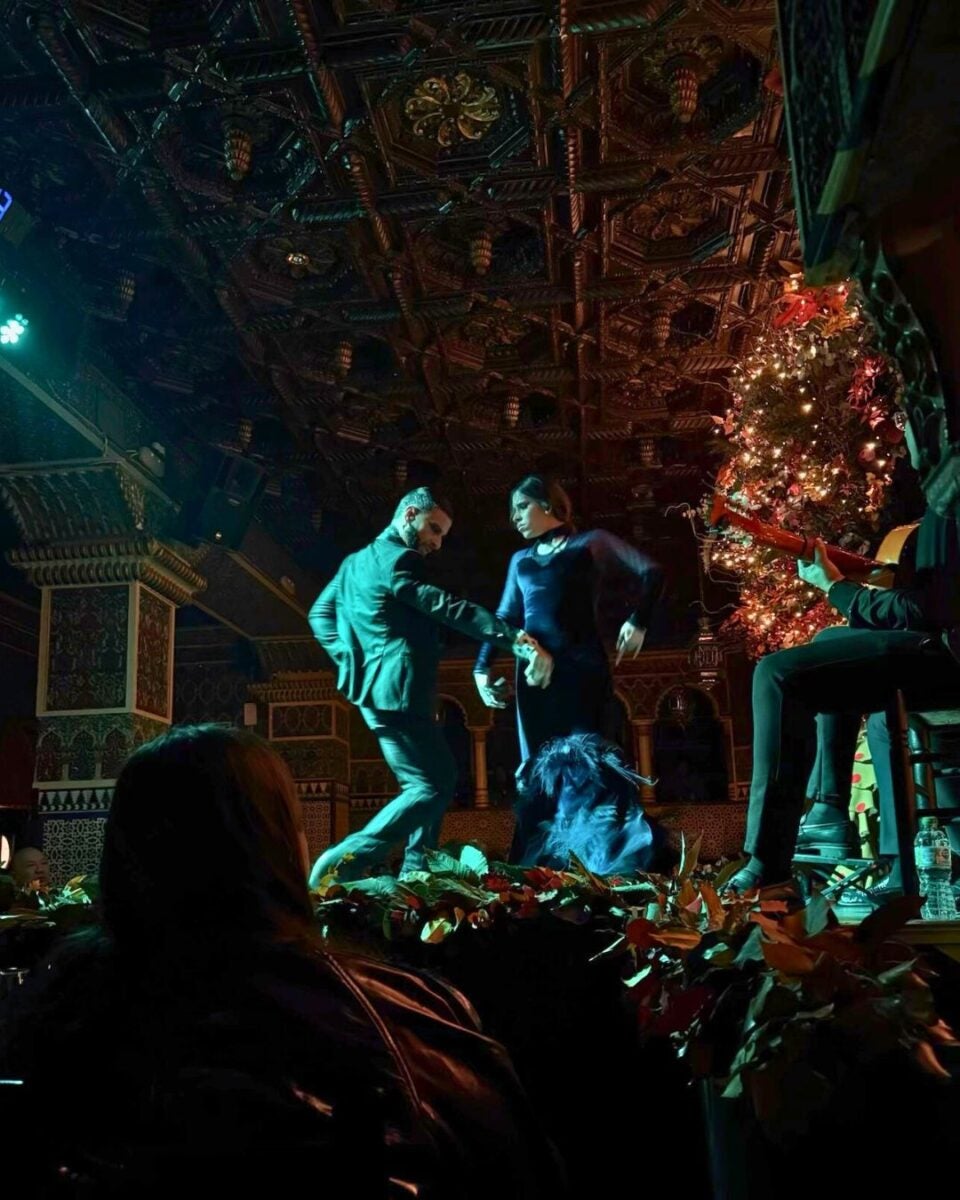
My favorite activity was watching a flamenco show at Torres Bermejas. After taking our seats, we comfortably watched as the lights dimmed, the dancers swayed out, and the music began to thrum, slow and romantic. The first sharp slam of a heel against the floor made us both jump. I know nearly nothing about flamenco, yet there was something particularly magnetic and intimate about witnessing such a raw manifestation of it on stage. I desperately wanted to learn, to let my body move unapologetically. Perhaps I’ll take lessons.
Afterward, wandering the curving streets of Sol, alive with nighttime anticipation, I bumped into a friend from my Dirección de Operaciones (operations management) class. Enrolling in the Spanish section was a leap of faith, one I took in hopes of deepening my understanding of the language in a business context. While it has been humbling to navigate decimals written with commas and the Income Statement in Spanish, I have somehow discovered I know more than I think. Earlier, when discussing my career plans, I had told my mom that I would come back. One of my professional priorities is globality, a connection to countries outside the United States and to people from around the world.
Following a brief introduction, we let my classmate rush off to dinner, but the encounter lingered. “You know people here now,” my mom commented. It was strange to realize that now, in this enormous city, I could step out and come across a familiar face. One of the pleasures of studying abroad was arriving knowing almost no one. With my life back home an ocean away, I walked uncharted territory with a sense of freedom that made the world feel infinite and undiscovered. Of course, this marvelous, magical newness was bound to fade, but I did not know whether this was something to grieve or celebrate.
At night, the two of us slept cold, shivering through the Madrid winter and a broken heater. We layered towels, sweaters, and socks to bury ourselves beneath the covers, trying to share warmth. Although the nights were long, my mom’s visit was short. By Saturday morning, we were eating churros at Chocolatería San Ginés, and then she was gone.
But it was all so perfect, and I am endlessly grateful. I feel as though I had the opportunity to witness a full-circle moment, one in which my mother’s efforts, experiences, and sacrifices have brought her here, enjoying the beautiful city of Madrid with her daughter. When we send pictures to our family in Texas, Ecuador, and El Salvador, they are all delighted on our behalf. And I carry that gratitude, that sense of fulfillment, with me here wherever I go.
This blog was contributed by Isabella Ventura, Global Ambassador for Spring 2026. Isabella is a McCombs School of Business Junior participating in an exchange program at Universidad Pontificia Comillas in Madrid, Spain.
What a great experience! So proud of you and all you’re doing!