“What is one experiment you might try this month?”
Our guest speaker, a petite woman with a carrying voice, repeated the question several times during our self-reflection activity.
Here’s what I wrote:
“One small experiment I might try this month is talking to locals. Try to make a friend, maybe at a pub. Maybe solo travel. I want to feel a stronger sense of belonging here.”
Part of the reason I wrote that is that I felt called out. Our professor assigned an essay called “The View from the Veranda: Understanding Today’s Colonial Student” by Anthony Ogden. The piece argues that study abroad is a modern form of colonization, that students are often trapped in a bubble of familiar people and attitudes, and experience a country as consumers rather than collaborators.
Reading it, I felt like the author was describing me, which was both unexpected and unpleasant as someone studying abroad to learn about the effects of race, class, and yes, colonialism, on United Kingdom education outcomes. The first tip Ogden offers to be an anti-colonialist student is to make a friend.
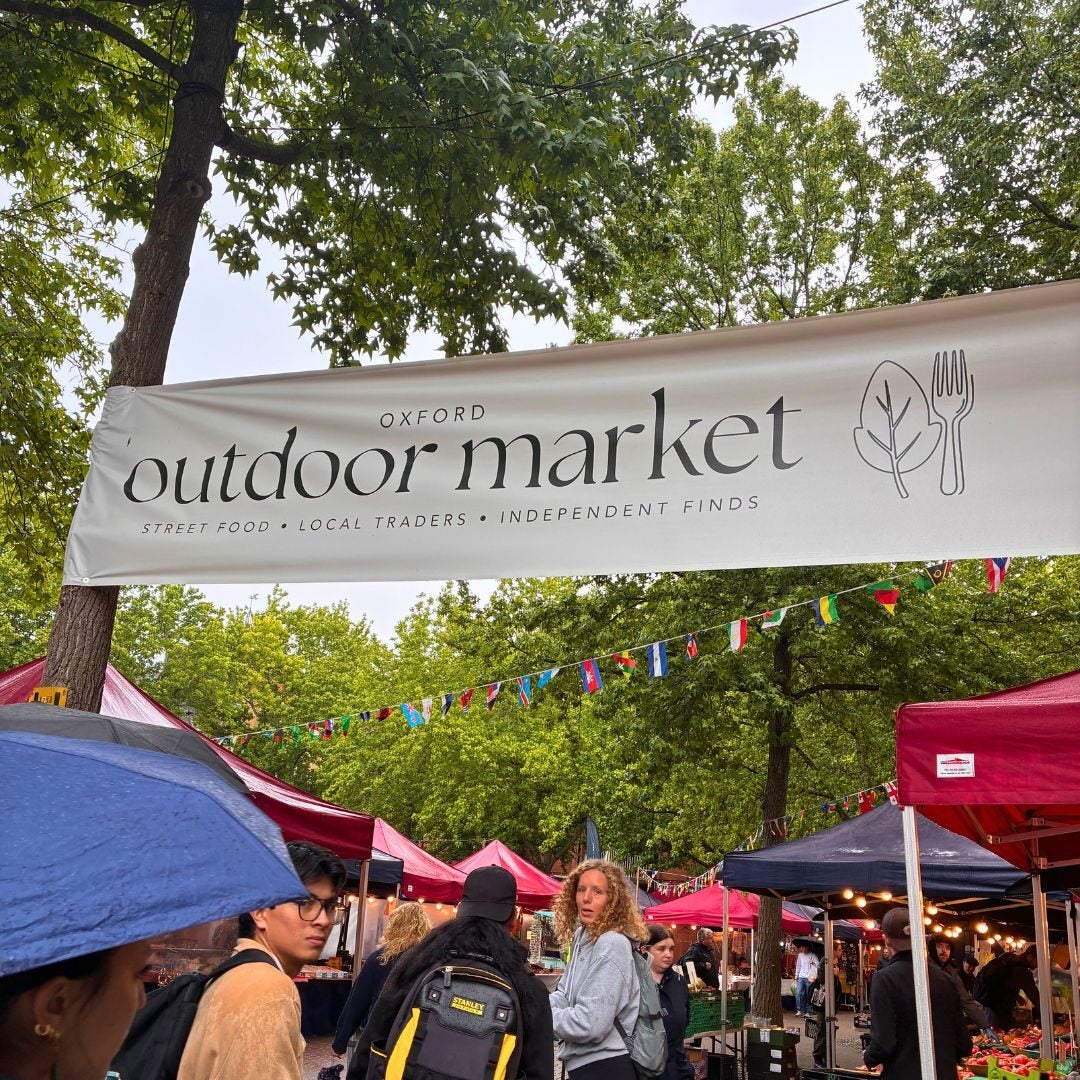
After class, I went to an outdoor market with some classmates. It was a vibrant, bustling hub of stalls with food vendors selling sizzling kebabs and steaming curries on one side and artisans hovering over tables heaped with handmade jewelry and colorful clothes on the other.
I came across a tent filled with woven bracelets and necklaces strung with scarlet feathers. As I perused, the seller, a merchant named Hugo, with waist-length brown hair and missing front teeth, began describing the objects to me.
He mentioned he was from Peru, so I switched to Spanish, and we chatted about his life as a traveling merchant and my aspirations to teach English abroad. He described the significance of a necklace with a chrysocolla pendant that I bought and insisted on making me a custom ring with a malachite stone, measuring it to fit my index finger. He told me to come visit him in Peru and gave me a hug before I left.
Walking away felt bittersweet. I knew that I would probably never see him again, but I felt a renewed sense of hope that being far from home is not so lonely after all; making connections is as easy as stopping for a while and being curious about a stranger’s way of life.
After meeting Hugo, I had a goal of talking to a stranger every day. Not just a surface-level “thank you!” or “excuse me,” where faces melt back into the crowd, but a memorable, story-worthy conversation.
There was Kez, the cashier of a souvenir shop, who taught me British currency slang. Bill means 100 pounds, pinky means 50 pounds, ben means 10, and fiver means five. At the end of every sentence, he would say “fam,” “bruv,” or “innit?” which kept cracking me up because it felt so cliché.
Then there was Therese, our Airbnb host on a weekend trip to Dublin, who greeted us with refreshments, alongside an old tuxedo cat with scruffy fur and cloudy eyes who meowed his hello, and a spry, curly-haired dog who licked our fingers and begged for slices of ham.
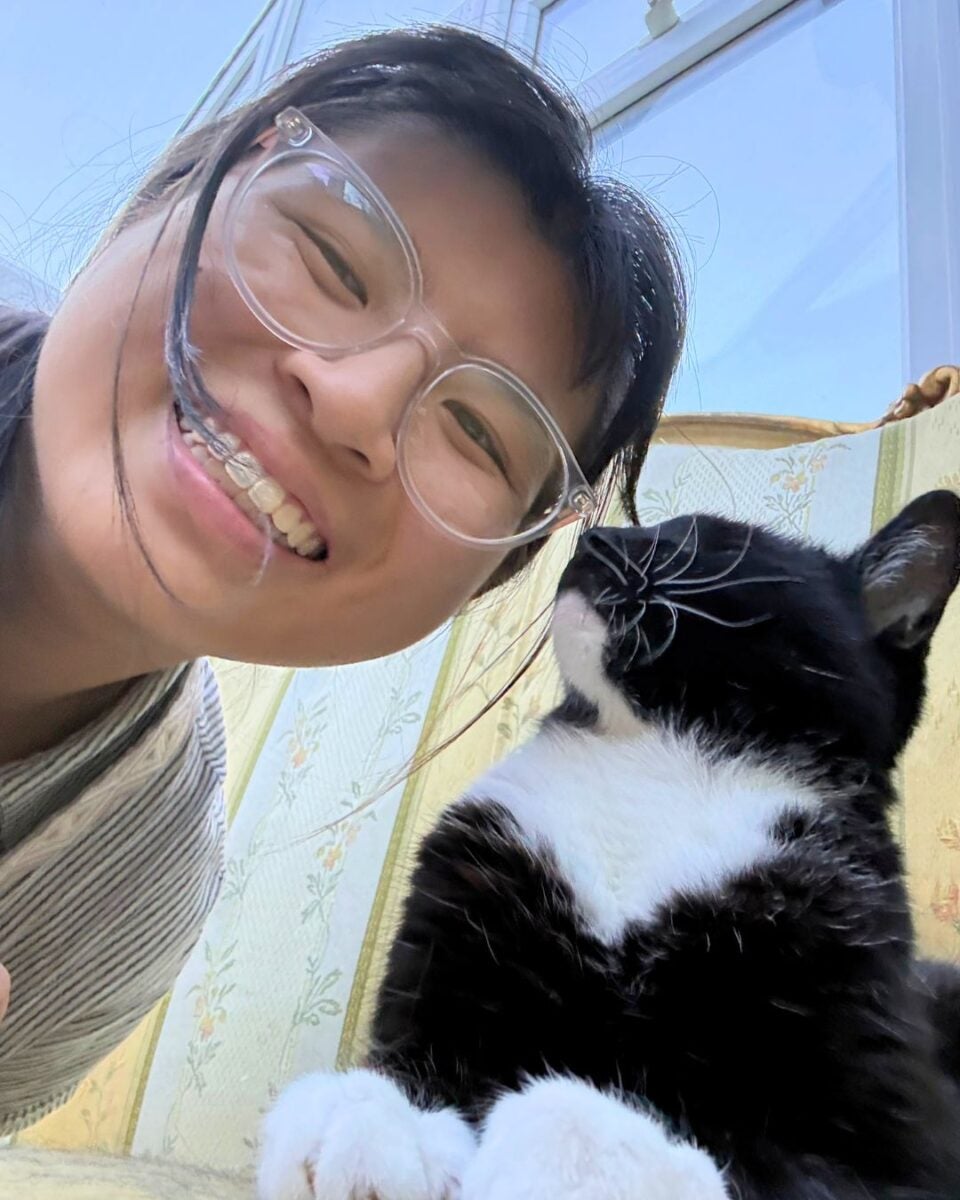
“What are the names of your pets?” we asked Therese.
“Oh, they’re not mine, but I call them Lily Cat and Lily Dog,” Therese said with a straight face. “I like the name Lily.”
And there was Vernon, an old man who complimented my playing on the sticky, worn-out upright piano in the train station.
“Brahms?” Vernon asked.
“Yes, an intermezzo,” I replied.
“Number 118, opus 2,” he said.
“Exactly!”
He asked me to play more and leaned toward the keys to listen. Then, he played an arrangement of “Memories of the Alhambra” and a Scarlatti sonata for me. The mellow notes were nearly drowned out by the screech of the rails, suitcases rattling across tiles, and the drum of conversation amplified by the vaulted ceiling, but they still found a way to resonate with me.
All these connections were lovely and special in their own way, but they gradually evaporated like puddles in the sun. A true anti-colonial friend such as I envisioned, one that anchors and invites belonging to a place, requires consistency.
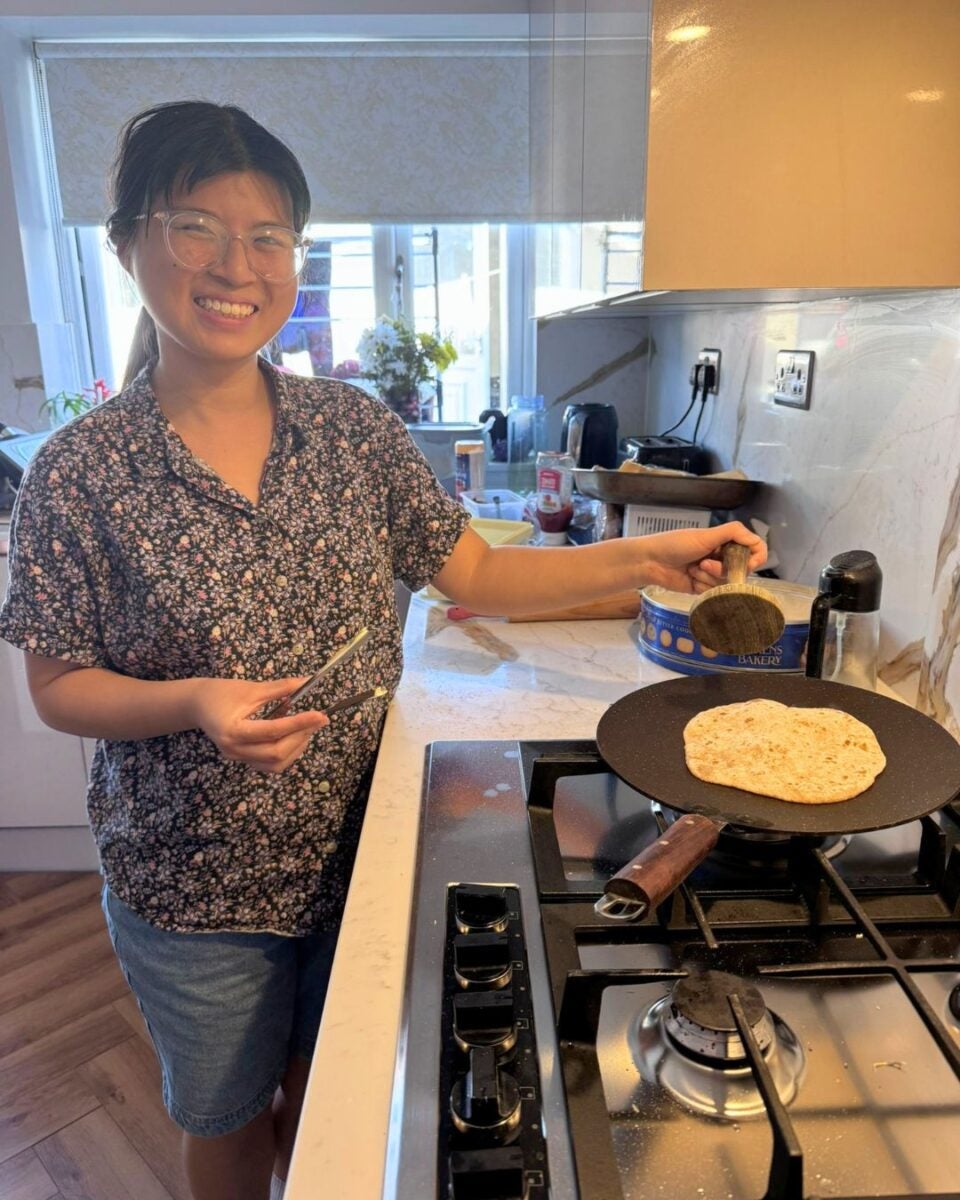
With my host mom Rizwana, I had that consistency. In a flower-print abaya and a loosely wrapped hijab, she would juggle the demands of four kids, cooking three meals a day, and hanging laundry in the yard to dry. Every morning, she would greet us very Britishly: “Morning, are you okay?” One day, she taught me how to make chapati, a flatbread. Mine was half the size of hers and somewhat lopsided, but she still inordinately praised me.
One late evening, I had a persistent cough that was making it hard for me to sleep. Rizwana asked if I wanted tea, and I sat in the kitchen, watching her prepare it. She ground some spices with a mortar and pestle, then added them, along with some warming herbs and brown sugar, to a French press. She poured boiling water over the mixture and let it steep before filling my mug.
While I sipped the soothing brew, we talked about her plan of going back to school and how motherhood permanently shifts the focus of life. She got married when she was 21, my age. I mentioned the Ogden reading about the colonial student, and the tricky balance of acclimating to a new culture while retaining your identity.
She told me that other study abroad students — not from UT — wouldn’t talk to her while staying at her home, and that my roommate and I had been her favorite homestay students, now part of her family. I said she would have to come visit us in Texas so we could return the favor.
Making a connection is a two-way street. The outcome of an interaction doesn’t have to be tangible or consumable; oftentimes, it’s just the warmth of knowing someone noticed you. Studying abroad is really about forming relationships.
While it is quicker and easier to bond with your classmates, I strongly encourage anyone wanting to study abroad to make a pointed effort to meet locals, hear their stories, and share your own. Cross-cultural connection is the one gift that gives back.
This blog was contributed by Samantha Ho, Global Ambassador for Summer 2026. Samantha is a College of Education and College of Liberal Arts senior participating in the faculty-led program “Exploring UK Education” in Oxford, England.