The moment I got accepted into the SPICE Communications Program in Erfurt, Germany, I knew I had to take a trip to Kraków, Poland. I’ve always had a deep appreciation for history, and it wasn’t until I sat down to plan my excursion that I realized how much there is to do in a city steeped in the weight of the past, where royal legacies and medieval grandeur exist alongside some of humanity’s darkest chapters.

A Journey Marked with Challenges
The day I set out for Kraków was one challenge morphing into another. During that time, Europe was in the middle of a sweltering heat wave, causing train delays and outright cancellations. Because of this, what should have been an almost 10-hour overnight trip ended up taking over 24 hours longer than planned.
My itinerary called for a first leg to Berlin, with a two-hour layover before my connecting train to Kraków. But my train to Berlin was canceled after its air conditioning broke down, and the next available train shrank my layover to 10 minutes — which didn’t matter anyway, since that train was also delayed, and I missed my connection regardless.
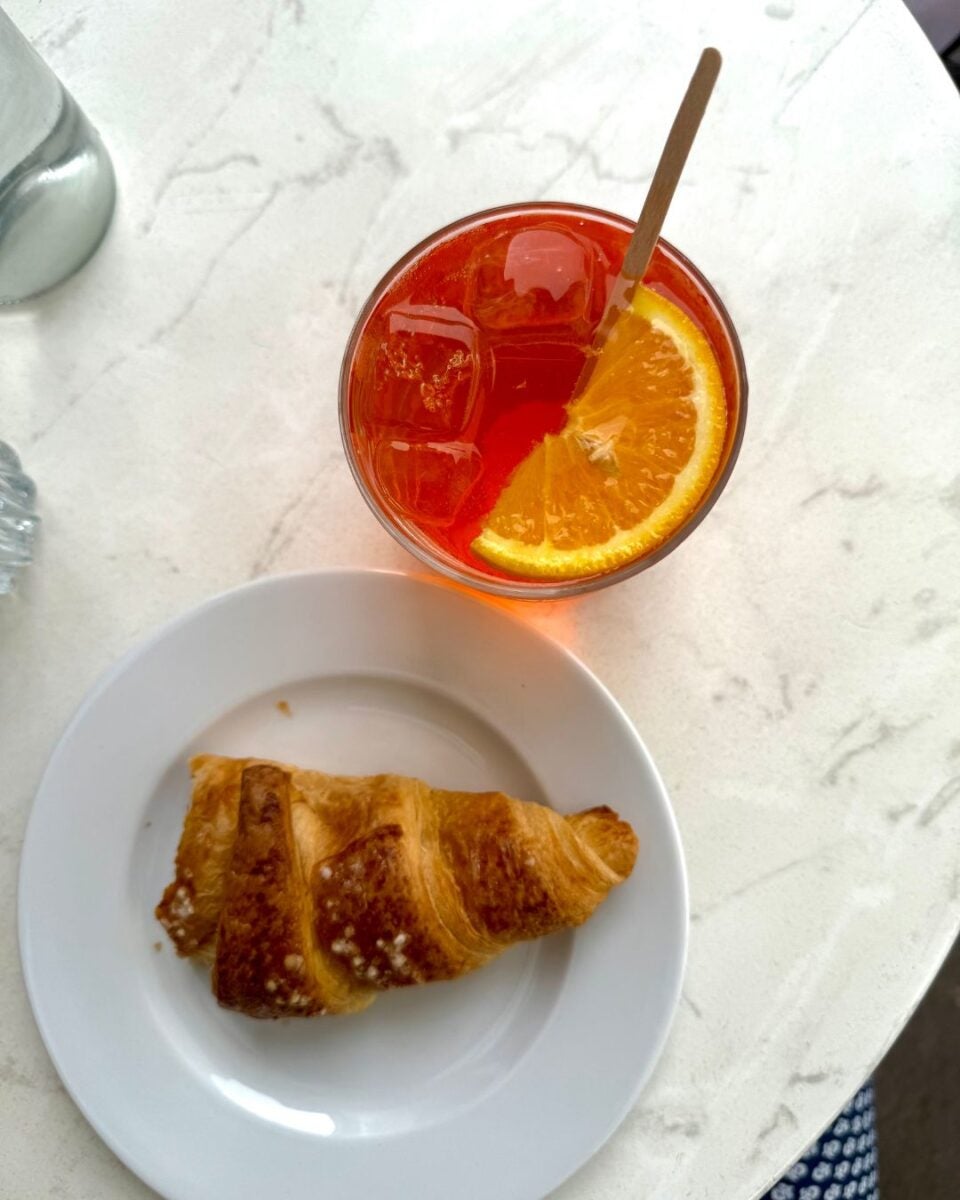
I won’t pretend I didn’t consider just heading back to Erfurt, but after a restful night upon arriving in Kraków, a good breakfast, and a smooth tram ride into the city’s Old Town, I was glad I’d pushed through.
Feeling Enchanted
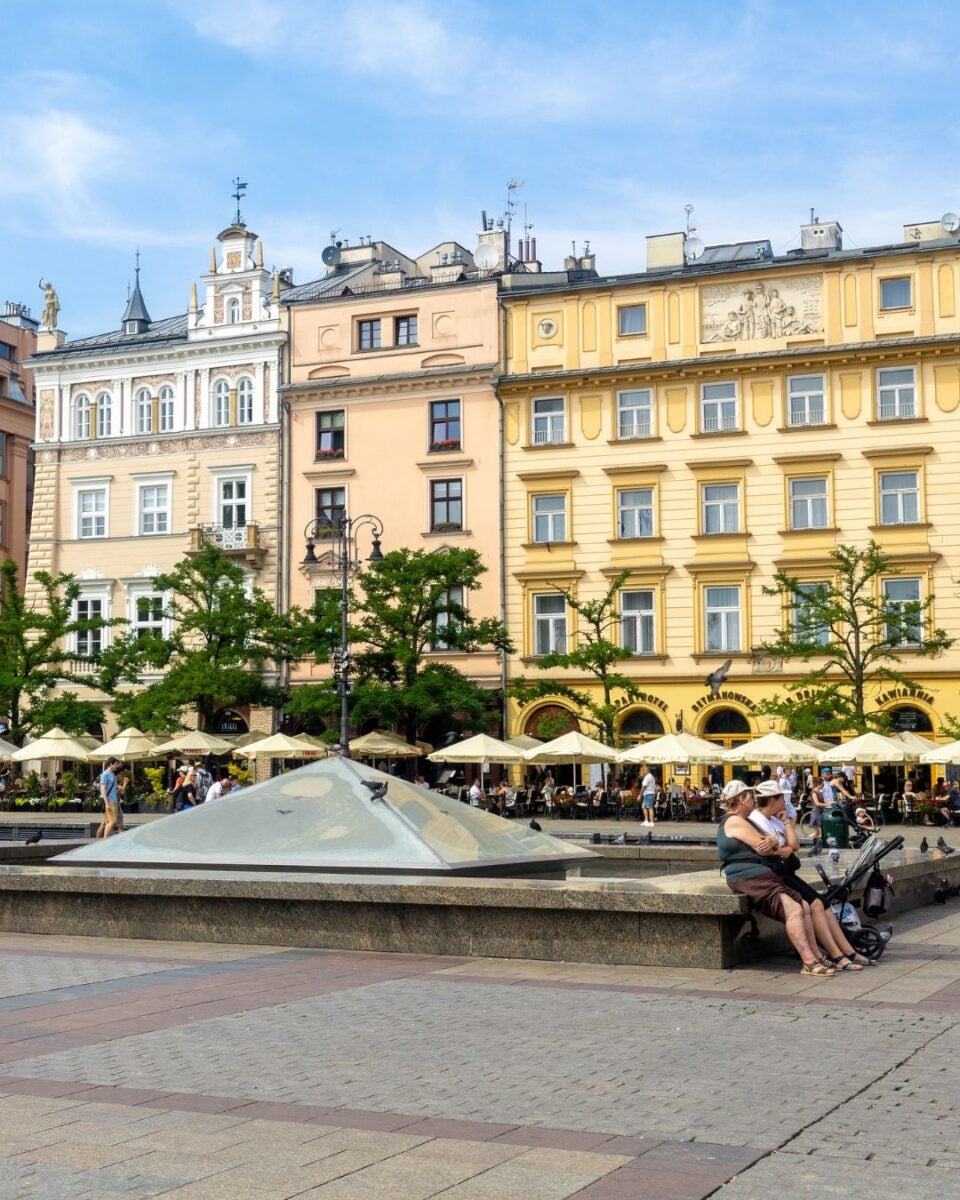
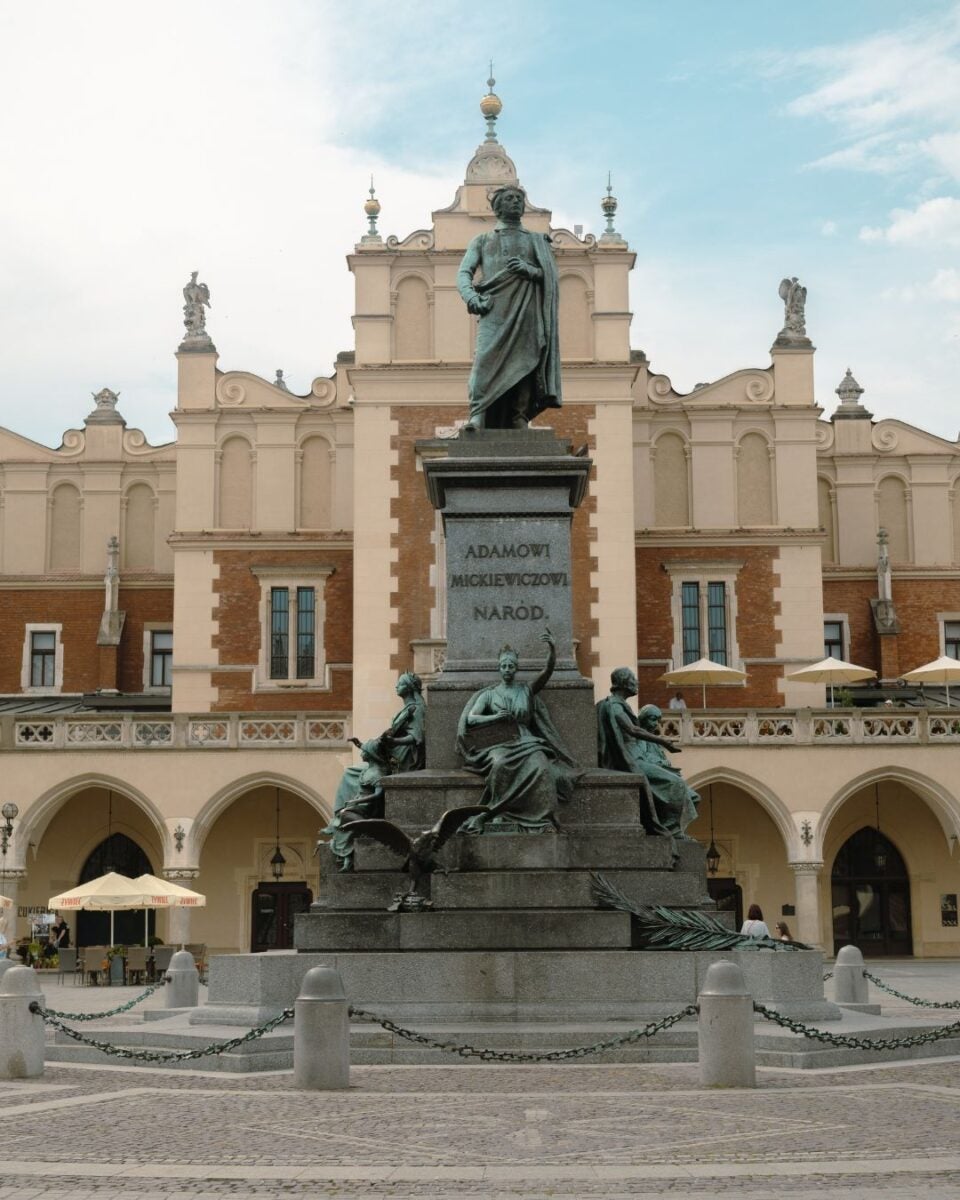
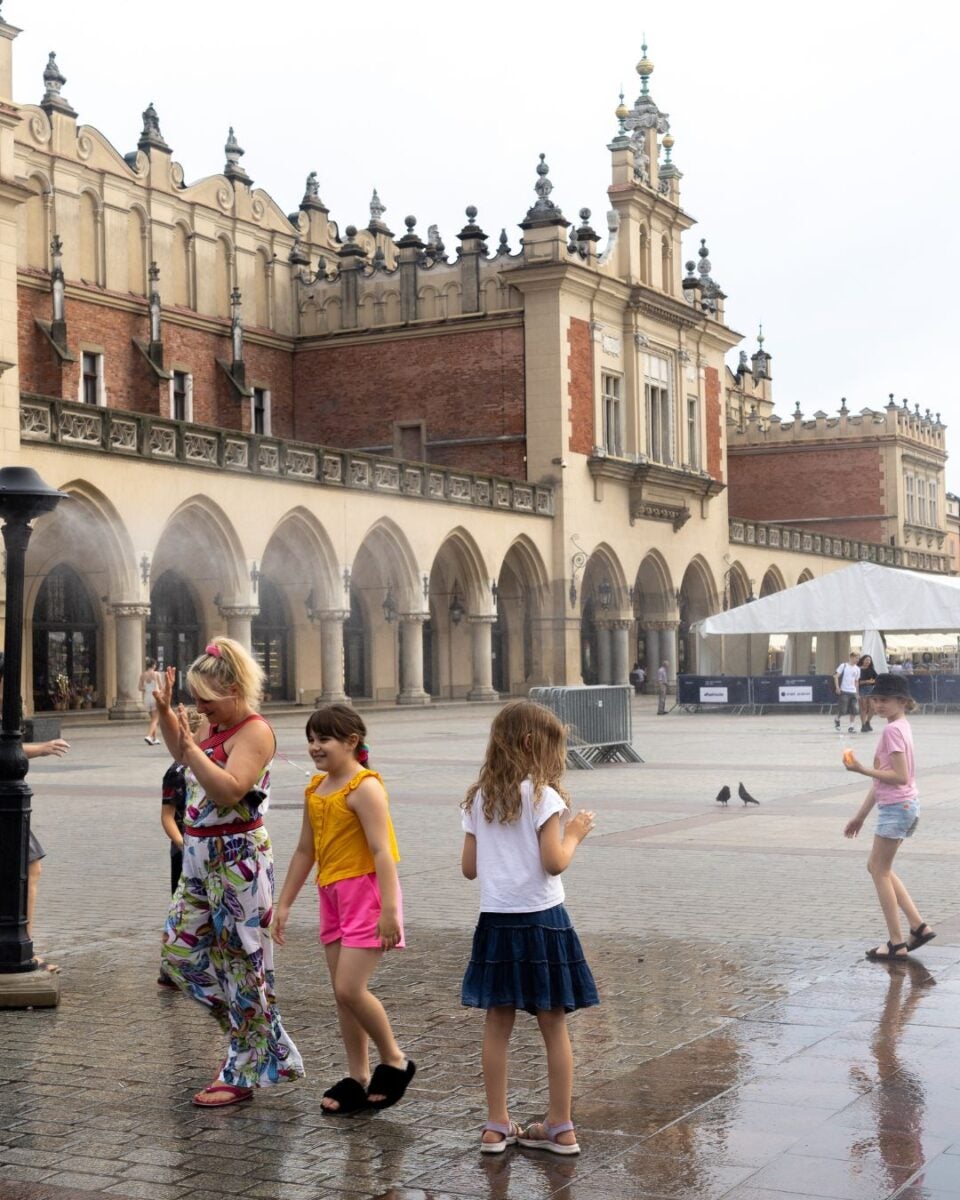
I got off the tram and walked through Planty Park — a belt of trees and pathways wrapping the Old Town where the medieval city walls once stood, before emerging into the Main Square. Rynek Główny market square is one of the largest medieval town squares in Europe, framed by the Gothic spires of St. Mary’s Basilica and the long, arcaded Cloth Hall.
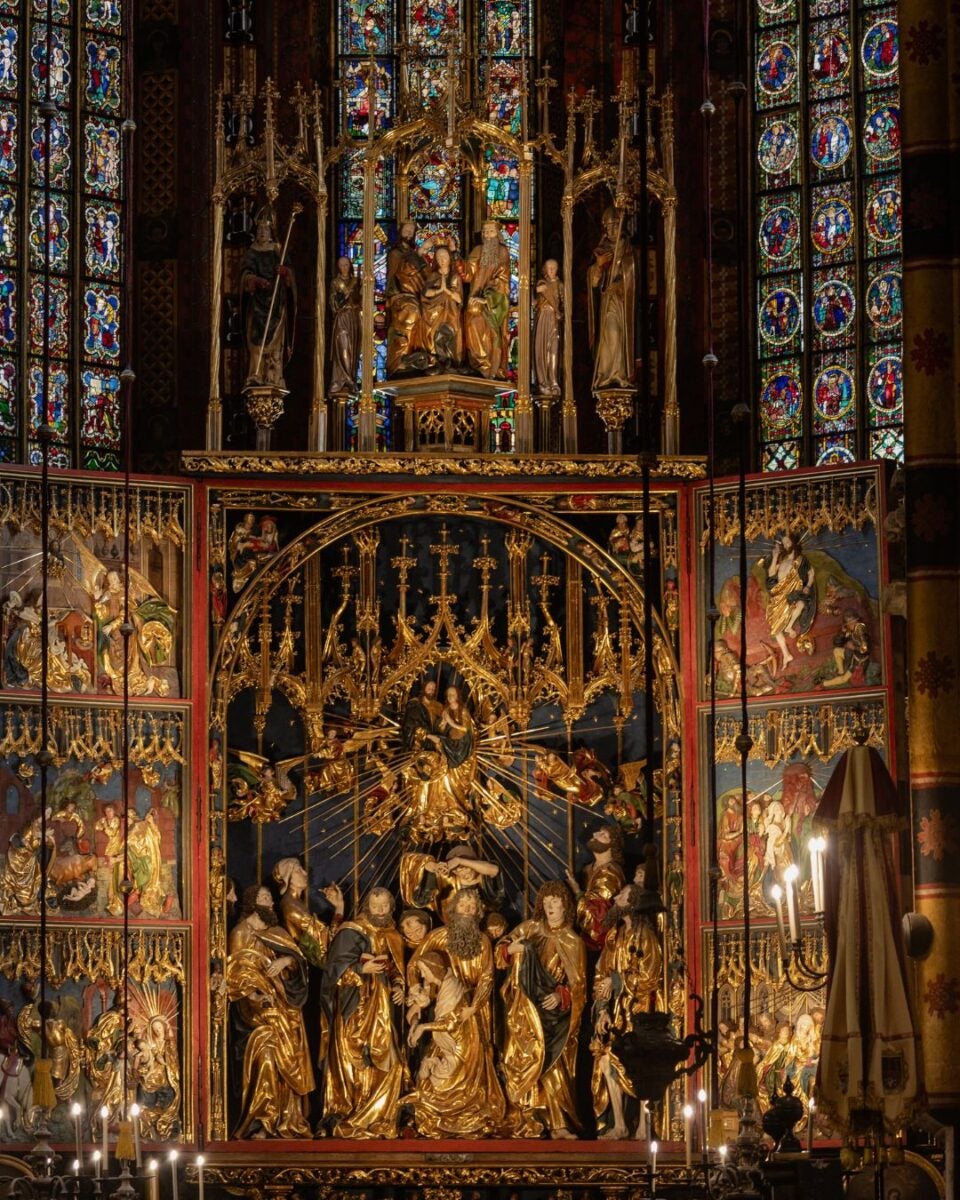
I’d seen photos of the basilica before, but nothing prepared me for stepping through its doors. The interior opens into a riot of blue and gold; every inch of the vaulted ceiling is painted with stars — the famous wooden altarpiece so large it takes minutes to take in each panel. Light filtered through stained glass in a way my camera couldn’t capture. Every photo I took afterward looked flat by comparison.
Back outside, the square buzzed with locals and tourists alike. At nearly every corner, vendors sold obwarzanek krakowski — braided bread rings that have been a Kraków staple since the Middle Ages. Pigeons swarmed too, utterly unbothered by the crowds. Children ran around them in wide circles, and others drifted right onto people’s shoulders and open palms, as though they’d done it a hundred times before.
An Underground World of Salt
I spent my second day exploring the Wieliczka Salt Mine, one of the world’s oldest operating salt mines until 1996. The descent alone is an experience — 380-some wooden steps spiraling down to the first chambers, over 60 meters below the surface. Generations of miners carved chapels, statues, and even underground lakes out of the rock salt as they worked.
The undisputed highlight is the Chapel of St. Kinga, a full working church carved entirely out of salt — floor, chandeliers, and bas-relief interpretations of the Last Supper worked into the walls. The chandelier crystals are made from dissolved and re-crystallized salt, so they catch the light like glass. It was a morning full of wonder, the kind that makes you grateful for what people can build when given room to hope.
Remembering the Past
Since my train back to Erfurt wasn’t until 9:40 p.m., I booked a tour of Auschwitz-Birkenau for my third and final day. The bus ride took a little over an hour, and the countryside was quiet and green, making the arrival feel even more jarring: the iron gate, the guard towers, the rows of brick barracks stretching as far as the eye can see.
Our guide walked us through Auschwitz first. The exhibit rooms house confiscated belongings of victims of the Holocaust that are kept behind glass. Over a million people were murdered at this site alone, but numbers are abstractions. What broke something open in me were the details: a child’s shoe no bigger than my palm and a wall of photographs of people gone within hours of arriving.
Meanwhile, Birkenau, which is a short drive away, was harder in its emptiness. Most of the wooden barracks are gone now, so what remains are mostly foundations and chimneys stretching across a field. The rail spur runs straight through it, up to the ruins of the gas chambers, and our guide let us walk that last stretch in silence.
I don’t think there’s a way to write about Auschwitz-Birkenau without it sounding either inadequate or performative. What I can say is that I’m glad I went, and I think everyone who has the chance should. It was not an easy day, but bearing witness — even secondhand and generations later — felt like the smallest and least I could do.
By the time I boarded my train back to Erfurt, I fully realized why the trip had been worth every canceled connection and sleepless night in Berlin. I’d gone looking for history, and Kraków gave me more of it than I could have planned for. What I didn’t expect was to fall in love with the city itself, in its entirety, rather than the sum of its sights.
Centuries of grief, grandeur, and ordinary daily life all sat within walking distance of each other, never canceling each other out. It was the bread vendors and the pigeons and the stained glass, but it was also the quiet of Birkenau and the hush inside that underground chapel at the Wieliczka Salt Mine.
Kraków never asked me to look away from any of it, and that’s exactly why it stayed with me. I don’t know when I’ll make it back, but I know I will. After all, there’s still so much of that city I didn’t get to explore, and even more of it I already miss.
This blog was contributed by Merryman Revell Creative Excellence Scholar Michelle Lavergne. Michelle is a Moody College of Communication graduate student participating in the Spice Communications Program in Erfurt, Germany.