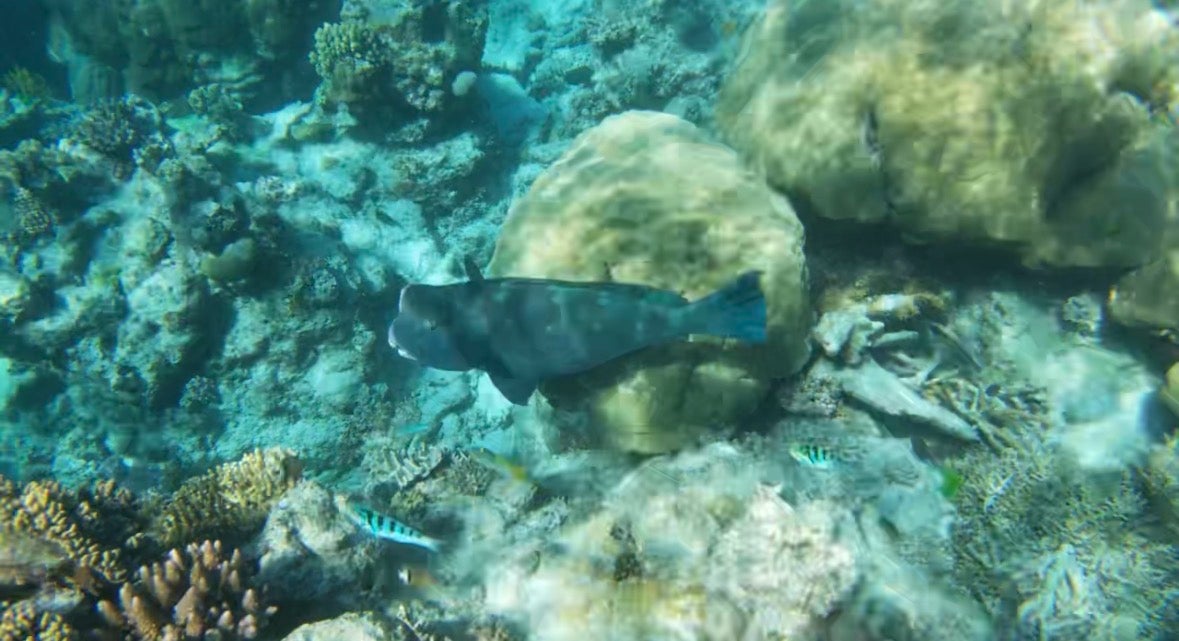
Anyone who tells you about the vast silence of the open ocean has clearly never watched a parrotfish eat. I floated above the bright blues, greens, and pinks as they darted past me in and out of coral avenues, noticing their distinct beak-like teeth scraping the edge of the coral with a distinct — and loud — crunch.
I’m swimming in Flynn Reef in Gunggandji Sea Country, about 37 miles off the coast of Cairns, Australia, one of the several thousand reefs that make up the reef system known as Australia’s Great Barrier Reef. Before this moment, I didn’t know I would ever experience something like this.
Just as I observed the colorful parrotfish, a large Māori wrasse emerged from behind a coral “bommie” — a word derived from the Aboriginal word for “standalone.” This coral bommie is ancient, slow-growing at approximately one centimeter per year, and rises like a boulder from the seafloor. Yet even this structure cannot hold my attention for long as my eyes drift below to a sea anemone, the home of several clownfish, or “Nemos,” as they are often called by tourists.
Life is everywhere. Being here is overwhelming — what a privilege it is to exist at the same time as such a beautiful, vibrant, ancient ecosystem. The coral bommies have stood here for centuries, fish weave through the reef in every direction, and the ecosystem appears as vibrant as ever.
But appearances can be deceiving.
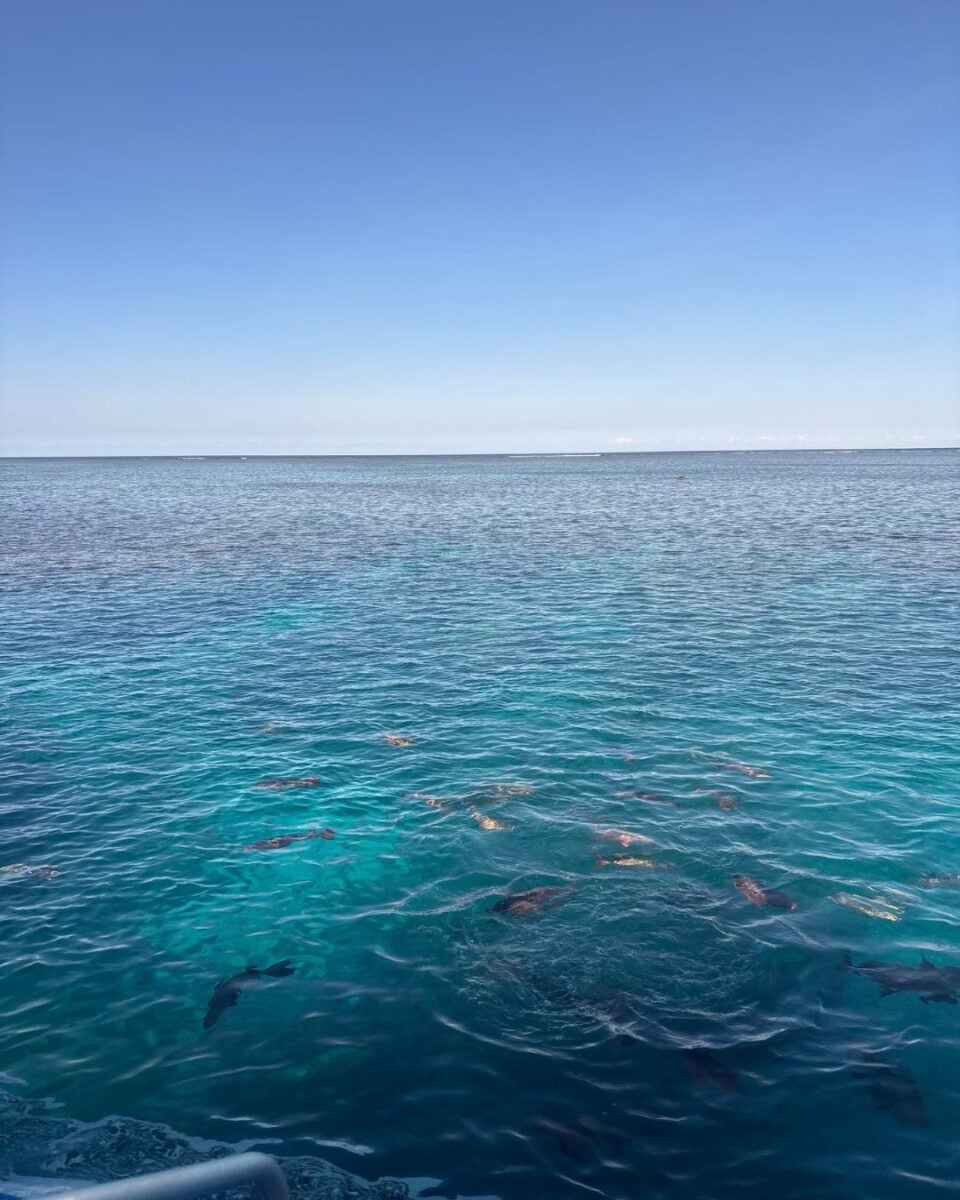
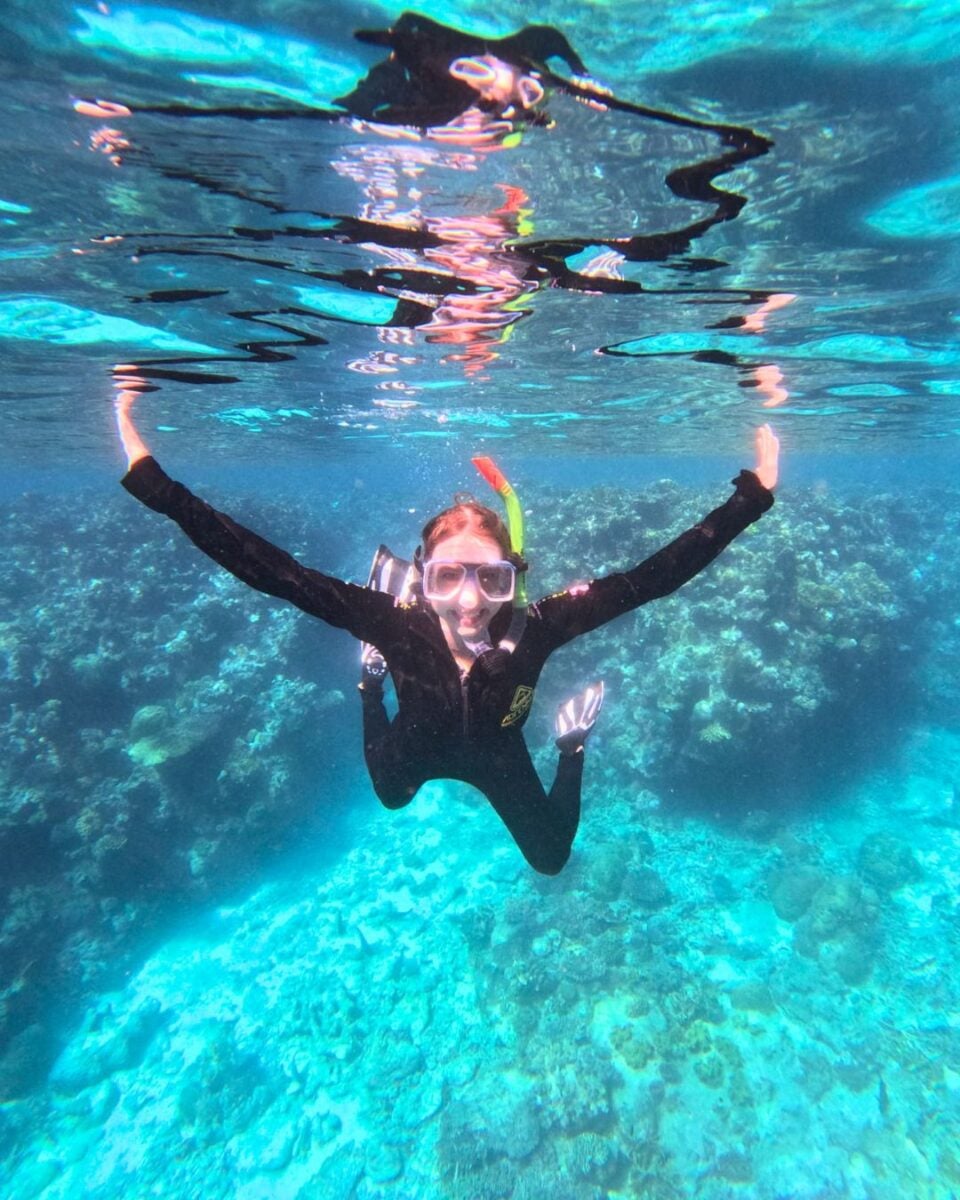
Amidst the beautiful seascape, I’m reminded of our previous snorkeling excursion — algal blooms on corals, visible coral bleaching, and fields of coral rubble from previous cyclone events. To an untrained observer, the sea life and marine ecosystem still look fantastic, yet comparatively, the quality is visibly deteriorating. Mass bleaching events and severe cyclones have become increasingly frequent in recent decades, while ocean acidification continues to place additional stress on reef ecosystems.
The Reef is at risk of an “In Danger” UNESCO World Heritage Site status. The kicker is that the Great Barrier Reef Marine Park is one of, if not the most, highly regulated marine parks in the world. And despite disagreements over certain regulatory principles, most stakeholders — and practically all Australians — care about the reef and want to do what they can to protect it.
That contradiction is precisely what makes the Great Barrier Reef such a fascinating political challenge. Unlike many environmental crises, the decline of the Reef is not primarily due to a lack of awareness. Across our three weeks in Queensland, Australia, we encountered stakeholders including commercial fishers, tourism operators, scientists, cane farmers, government officials, and conservation advocates who all recognized the Reef’s importance despite disagreeing on policy solutions, regulatory approaches, and economic priorities.
Still, local management can regulate fishing, tourism, shipping routes, and coastal development, but it cannot stop rising ocean temperatures or ocean acidification. The Great Barrier Reef is both a local ecosystem and a global one. Decisions made in Brisbane and Canberra, Australia, matter, but so do decisions made globally, far removed from the coral itself.
Floating above Flynn Reef, watching parrotfish carve away at algae growing on century-old coral, it was difficult to imagine anything threatening such a vast and resilient ecosystem. Even so, the Reef’s beauty makes its protection more urgent.
There is something profoundly human about recognizing beauty and deciding it is worth preserving. The people fighting for the Reef’s future do not do so because success is guaranteed. In fact, they do so because the future is so uncertain, yet they believe the Reef is worth the effort.
Looking out across the coral gardens challenged me to approach my own life with the same mindset: to pursue the people, places, and causes I care about without waiting for certainty before taking the first step. In many ways, the most memorable experiences begin with a decision to say yes to a new place, a new challenge, or an unfamiliar opportunity.
Studying abroad in Australia has therefore become a reminder that the most meaningful experiences (and lives) are built by choosing to act on what we value before we know how the story will end.
This blog was contributed by Sara Allen, Global Ambassador for May 2026. Sara is a College of Liberal Arts senior participating in the faculty-led program “The Politics of Protecting the Great Barrier Reef” in Townsville, Australia.