Being in Australia for my first-ever study abroad program has been a life-changing experience, immersing me in a new culture and letting me meet knowledgeable and incredible locals every day!
Specifically, I’m participating in the “Politics of Protecting the Great Barrier Reef” program, in which we explore Townsville, Magnetic Island, Hidden Valley, Cairns, and Brisbane, Australia, over 23 days.
It has been nonstop learning and fun every day, and I’m grateful to share a glimpse of what this month has been like so far through local research-led lectures, in-depth facility tours, marine snorkeling experiences, outback hikes, and so much more.
Magnetic Island
To begin our journey on Magnetic Island, we had the chance to immerse ourselves in a small community that houses a national park in the mountains, preserving more than 80% of the area as protected rainforest habitat, home to koalas and other wildlife.
During our time, we explored these natural wonders and spoke with residents on the island to learn how they operate in their community and how they help protect the Great Barrier Reef. After our discussion, we had plenty of time to hike World War II fort ruins, see koalas, snorkel over fringing reefs, feed rock wallabies, watch the Arcadia cane toad races, sail beside shipwrecks, and explore rock pools during low tide.
It was an amazing chance to bridge the gap between the environment we viewed and the experiences of locals living there. After concluding our island stay, we ventured to Hidden Valley, an off-grid cabin resort in the mountains. It provided a much-needed phone detox and allowed us to immerse ourselves in the Australian wilderness.
However, what really made the trip worthwhile was learning how the resort operates as the first in Australia to be completely solar-powered and self-sufficient. It was incredible to see just how much they were able to cut back on their environmental footprint and carbon emissions, encouraging us to adopt practices we can use at home to save energy.
During our time there, we hiked into a river gorge through the dry tropics and even took a trip into the rainforest, where we got to see leeches up close and personal. We also participated in a night hike to see some of Australia’s rarest animals, such as greater sugar gliders and even a platypus!
It was an amazing experience that allowed us to explore several facets of the environment and how we impact it every day.
Townsville, Australia
From there, we headed into Townsville for a weeklong stay. We focused on meeting with environmental scientists and stakeholder representatives. We spoke with James Cook University professors about the Great Barrier Reef zoning plan.
We even toured the Port of Townsville to see how they manage their operations to ensure compatibility with the delicate reef ecosystem. It was incredible to see how devoted and passionate these individuals are in protecting one of the world’s most remarkable marine ecosystems.
We even got to spend a day conversing with the traditional owners of Australia, the Nywaigi people, at Mungalla Station. There, we learned about their ancestral history and their cultural ties to the land and marine environment. It was a chance to acknowledge those who came before and explore how they lived on and used the land more than 60,000 years ago.
More to Come
Overall, my trip so far has proved to be much more than a simple vacation; it is a real-life chance to immerse myself in one of the world’s most protected environments to understand how policies affect the reef and also the locals who depend on it.
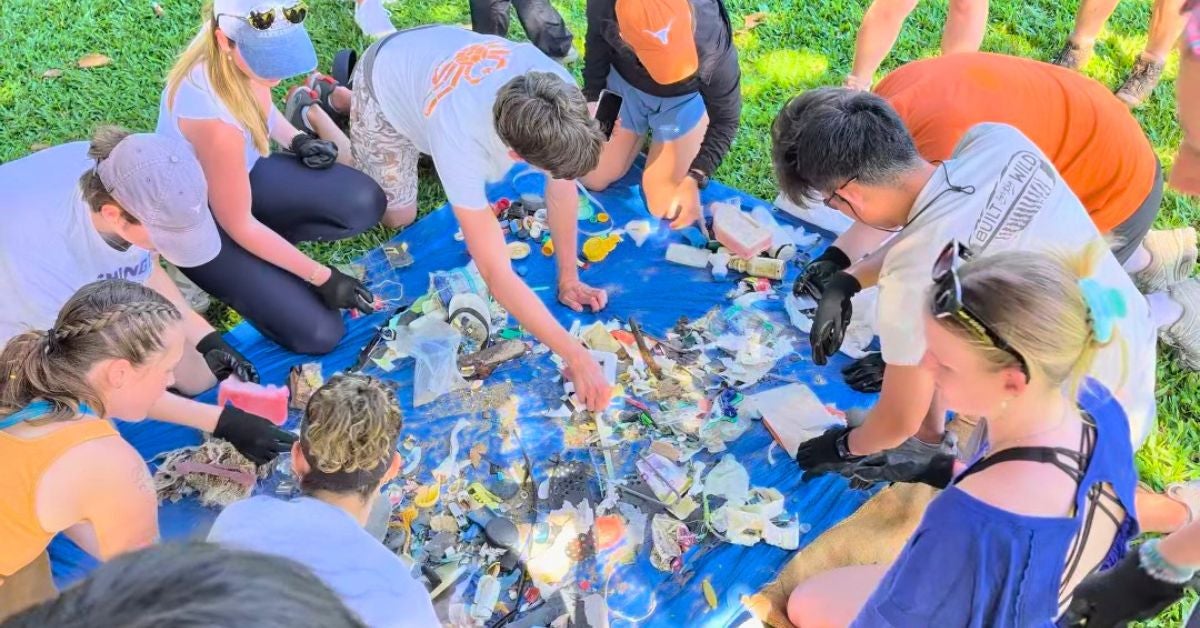
That is not to say that we haven’t had a fair amount of free time to explore local cuisine, meet new friends, participate in a beach cleanup — and even attend a Townsville Cowboys rugby game!
I’m excited to continue my journey here to learn more about one of the world’s most diverse wonders through the lens of environmental research and its connection to community.
This blog was contributed by Katie Roy, Global Ambassador for May 2026. Katie is a Moody College of Communication sophomore participating in the faculty-led program “The Politics of Protecting the Great Barrier Reef” in Townsville, Australia.